Showing posts with label Shade plants. Show all posts

Wednesday, March 21, 2018

Epipremnum aureum 'Frosty'


'Devil's Ivy' Frosty
Epipremnum aureum 'Frosty'
I have been growing this white variegated form of Devil's Ivy for several years now and find it more appealing than the yellow/gold form which has much larger leaves. I have several plants of it growing in different positions both indoors and out and at this time of year it is looking at its best, responding well to warm humid days.
The leaves are somewhat stiff in appearance and when unblemished it could be said the whole plants looks plastic or artificial. Perfect! Of course it does not stay that way for long and during winter many leaves develop burnt edges or drop off as a response to cold.
This is when the plant needs a rest, given minimal water and kept in a warm sheltered location, preferably out of sight as the temptation to bin a tired looking plant may overtake you.

Frosty......

Sunday, February 25, 2018

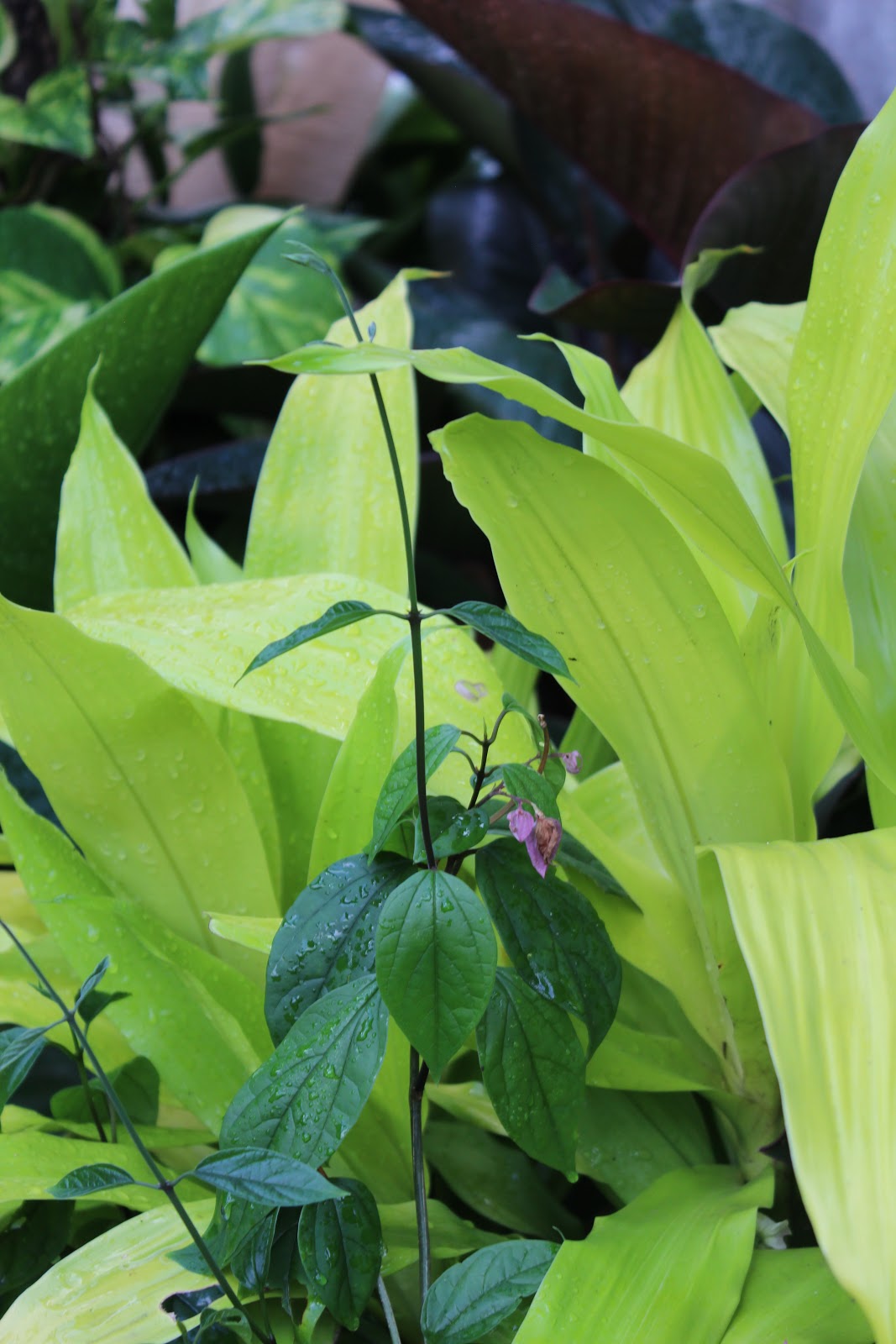
Dracaena deremensis 'Janet Craig Limelight'


 Dracaena deremensis 'Janet Craig Limelight'
The multi-branched garden planted specimen of this plant is now about three metres tall and growing under house eaves in a shady spot. It does not look half as good as the potted specimens I have pictured here which are in a greenhouse and sheltered from the elements.
 A few years back a large branch of the garden one toppled over in a storm so I cut it up into 30 cm lengths so I could propagate some new plants.
Stems cuttings from a mature plant take root quite easily though they require a free draining mix with lots of Perlite as part of the propagation mix. After a couple of years they have now grown to about 120cm in a 200 mm pot and I can almost say they thrive on neglect as they don't seem to mind a low water and fertilizer regime.
 I placed one of these indoors several months ago and though it has lost its very bright yellow leaves it still has attractive shiny pale green foliage.
With a bare trunk it has an elegant palm tree like appearance in a red ceramic container.
Outdoors the leaves rarely stay unblemished by strong winds or insects.
I am reminded of that other Dracaena (fragrans) which gets shredded by grasshoppers when grown outdoors in a warm climate. Many so called indoor plants just don't make the transition well when planted as garden specimens ,though some rejoice in their freedom and turn into monsters such as Ficus/'Rubber Plants'.


Sunday, May 7, 2017

Plectranthus 'Cape Angel Pink'


Plectranthus 'Cape Angel' with a pale pink Malvaviscus penduliflorus
The 'Cape Angel' Plectranthus, of which there are white, purple and pink flowering forms as well as the dark foliaged 'Mona Lavender' variety, have been around in the garden scene for over ten years now and have become a real highlight of the autumn garden scene. Long flowering and tolerant of drier shade locations they can be grown in pots or garden beds and reach a height of about a metre. Their 'shelf life' is only around five years however as they can become woody with age and lose vigour and they are susceptible to being disfigured by the dreaded flea beetle which damage the foliage leaving it permanently pock marked. I find the use of a granular systemic insecticide breaks the life cycle of this pest if caught when the first sign of damage occurs. Replacement plants are fairly easy to produce by cuttings and the old method of sticking a stem in the ground where required may suffice such is the ease of propagation of this plant
'Cape Angel' a hybrid between two South African species, P. saccatus and P. hilliardiae, the former which is also in flower now has delightful flowers resembling the Jacaranda.
 

Tuesday, April 18, 2017

Philodendron 'Gold Bullion'


                     Philodendron 'Gold Bullion'
I have been growing this for about a year now in a pot on the deck in a semi shaded position and noticed this week that some of the leaves are changing colour in response to cooler weather. The leaf veins are developing a delightful pink tinge.
This Philodendron is related to 'Xanadu' and is just as hardy as long as it is given some protection from frost. In a garden situation 'Gold Bullion' could be mass planted under trees as it is able to cope with dry shade and the leaf colour would certainly add brightness and vigour to the garden picture.
It is equally at home as an indoor or balcony plant and its low water requirements means means it can be left unattended for a period of time without looking back.
There does not seem to be any insect or disease problems associated with it either. Ten out of ten. 

Sunday, April 2, 2017

Epiphyllum anguliger, the rick-rack cactus


                    Epiphyllum anguliger
When this flowered a couple of months ago I didn't think to stick my nose up close to indulge in the scent. It was only after reading the perfume being described as 'delicious' by horticulturist Edward Kemp (1910-2012) (Yep he lived to 101) curator of the RBG Edinburgh from 1950 to 1971, that I knew I might now have to wait a whole year to experience that treat.
Kemp's description of this species is in his occasionally off kilter translation from the German of Das praktische Kakteenbuch in Farben by Walther Haage 1961 , 'Cacti and Succulents' Studio Vista 1963.
Apparently 'Epi' cactus have been around since 1689 when they were described by Dutch botanist Herman Boerhaave (1668-1738) at the Hortus Botanicus Leiden. Hence from him epi = upon and phyllum = leaf. 
Growing it gives the usual challenge of finding a sturdy enough, large enough container in which to place it. Branches grow every which way and arch down to ground level presenting that temptation to passing snails which they can hardly resist. While relatively small in root system, the branches carry quite a bit of weight and as the plants require a light free draining orchid style potting mix, it is worth placing some stones around the base of the plant to keep it from being wrenched out of the ground in windy conditions. Though I have grown it successfully from cuttings, many have succumbed to rot from over-wet conditions. So a spot with summer shade and a warm dry bright position over winter would suit it best, with the occasional dose of liquid fertilizer to keep it healthy.

Sunday, February 1, 2015

Plectranthus 'Pygmy'

Plectranthus 'Pygmy' (Lamiaceae)
and when coping with light foot traffic.
A terrific hanging basket, ground cover or vertical garden plant, this Plectranthus ,which is probably a form of P.australis, has been available for a few years now and the only down side I have found to growing it is that it grows too fast, needing constant trimming back in a pot to keep it in check.
Pretty mauve and white flowers appear in autumn on the end of the trailing stems though it is the purple underside of the glossy leaves which are the real highlight. It will grow in full sun or deep shade and can spread a great distance to form a weed suppressing mat. Even if it strays across a path and gets trodden on it keeps on growing. It is a low water use plant and will tolerate some light frost but may need to be replaced in a pot when it 'exhausts' the growing medium as it exhibits tawny or cream leaves from fertilizer stress when this happens.
2017 update: I have stock in 140mm pots. 

Sunday, November 16, 2014

Ranunculus repens 'Buttered Popcorn'

Ranunculus repens 'Buttered Popcorn' (Ranunculaceae)
 The gold leaved form of this water loving buttercup is a real winner but it can be a bit invasive if given a damp spot in shade. I am keeping mine in a pot half submerged in water so it can be moved from sun in spring to deep shade at the height of summer. Technically you could describe it as a woodland margin plant fond of damp ditches in Northern Hemisphere locations and this selected form is useful for brightening dull  garden corners, though its leaves may become less yellow in deep shade.
There are some 400 species of buttercup found in temperate zones across the world including Australia. Most have shiny yellow ,cream or white flowers.

Bulbine frutescens

 Bulbine frutescens (Asphodelaceae)
This grassy onion leafed succulent is a recent find for me and one I see adding to the range of commercial plants I grow in time. Plants with attractive bright flowers which are able to tolerate dry shade are always welcome in my book. This 30cm high clump forming perennial groundcover is found growing in South Africa to Mozambique but has been much used in xeriscaping in Arizona, Texas and dry gardening communities in the US. A mention of it in a garden forum from a South Australian resident shows it does have a small fan base here, and the comment from that person praised its use as a sun burn cure in a similar way to Aloe vera.The 'tiny tangerine' flowers with their fluffy yellow stamens are carried on tall stems up to 60cm in length and are produced in succession up the stem from spring onwards.
2017 update: Failed to sell in the nursery trade market.

Sunday, October 26, 2014

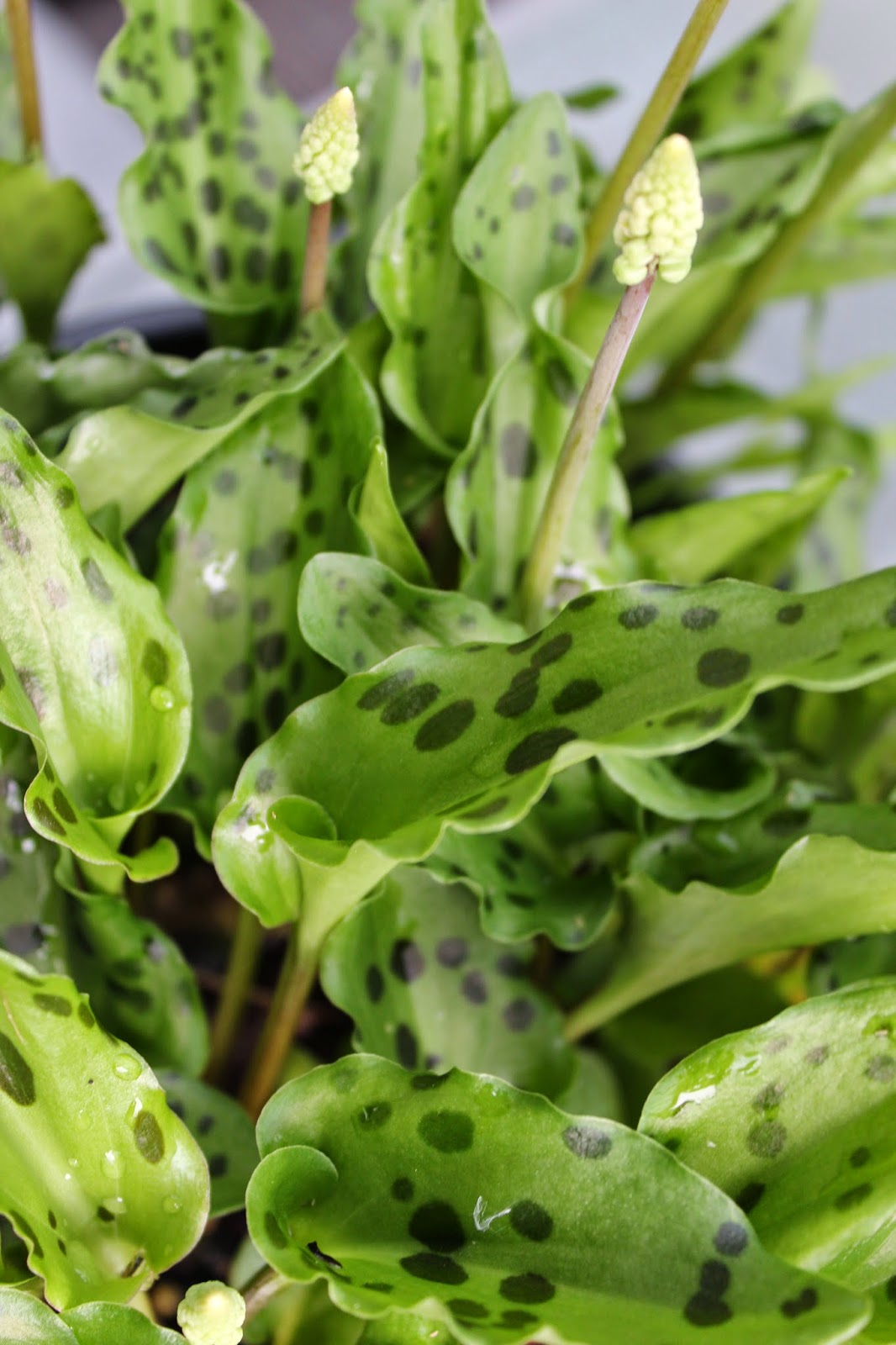
Ledebouria petiolata


Ledebouria petiolata syn. Drimiopsis maculata
(Hyacinthaceae)
The good folk at Larkman's Nursery in Victoria bought this to my attention recently as they market it as an 'African Hosta'. Unlike the Japanese Hosta this plant thrives in poor soil and with minimal water but it is equally loved by snails and slugs which generally spoil its appearance as soon as your back is turned. At this time of year it produces masses of short stemmed white flowers which resemble miniature Hyacinth but without the perfume. It grows from a series of fleshy bulbs which protrude slightly above the ground.These can be easily divided to form new clumps of plants. I am in two minds about this plant; one could consider it as a "novelty" item or as a serious contender for a difficult garden site of dry shade under trees where not much would grow and where it would be quite at home. Otherwise it makes a terrific pot plant which can be brought indoors when in flower or if you like things a bit dotty/spotty.

Sunday, April 27, 2014

Sweet Cicely, Myrrhis odorata

 Sweet Cicely 
 Myrrhis odorata (Umbelliferae)
I have Buckley's chance of being able to grow this herb well but it is worth a shot. I bought this at the recent Collectors' Plant Fair and a lady next to me who was buying one also told me she was from Bathurst so she has a much better crack at growing it successfully.
 Sweet Cicely is a European shade loving perennial which is stimulated to grow well by a certain amount of snow cover over winter. Move to Scotland I hear you say? Snow has the effect of scarifying any fallen seed thus aiding germination and when the snow melts the trigger for growth is manifest. It is said to be the last herb to die down before winter with the foliage first reacting to the cold by turning purple. As a flavouring herb Cicely has a mild sweet flavour of aniseed or liquorice. All parts are edible including the roots which can be cooked as a vegetable. I have a 'food memory' of it from over thirty years ago. When visiting Madge Hooper at Stoke Lacey Herb Farm in Bromyard, Herefordshire, I was given the green seeds to chew on. They were sweet and very pleasant tasting. It has been a long wait to finally get my hands on a plant for however long I am able to keep it alive.

Thursday, January 2, 2014

Sansevieria in flower


Sansevieria ssp. flowering stem
Sansevieria or 'Mother-in-laws-Tongue' can be tricky to grow outdoors in climates outside the tropics. I have given up trying to grow some species as each year during winter they develop brown spots on the leaves which often turn mushy and rot out or the top leaves burn off and die downwards. They are a tough plant however and new shoots appear in summer from the massive rhizomatious root system which has the power to break through plastic pots in search of new ground to conquer. Flowering stems appear from time to time over summer and these always draw the eye as they seem like an explosion of greenish yellow petals. The red or orange fruits which follow ripen slowly and these contain seed which are fairly easy to germinate though new plants are slow to reach a good size. Propagation is more easily carried out by division of mature plants. In the meantime my collection of Sansevieria plants languish at the back of the Nursery and only occasionally get a once over tidy up such is their ability to survive with just the water that falls as rain.

Monday, December 30, 2013

Nigella damascena

Nigella damascena (Ranunculaceae)
 Earlier this month I tried to grow a batch of Nigella in 140mm pots as a commercial plant for sale in the nursery trade markets. This proved difficult as it is a plant which resents being transplanted once the seeds have germinated. Losses were high so I abandoned the project and it proved that it really prefers to hangout in a semi shaded garden corner in moderately rich garden soil where it can do its thing without disturbance, usually self seeding and returning each year if it happens to like the location. A cooler more temperate climate than mine may have helped in successful growing of it also.
The 'Persian Jewels' mix of Nigella contains some wonderful colours including a true sky blue , a deep purple, a crushed strawberry pink and of course white as shown here. The bonus with growing it is for the seed pods or capsules which are also decorative and these can be picked and used in dried flower arrangements.
Common names abound for this plant and include the English, Love-in-a-Mist or Devil-in a-Bush, the latter name referencing those horny little protuberances which top the flower. Other common names reference the veil of delicate, spidery or lacy foliage bracts which surround the flowers. It is a true texture or 'stroke me' plant ideal for sensory gardens. The German Venushaarige braut im haaren (Venus haired bride) or Jungfer im grunen (bridesmaid in green flower) paint the picture nicely of this fennel like foliage.
The other species of Nigella which I have yet to grow, N. sativa, yields the seed which is sometimes goes by the name of black cumin.The aromatic and pungent seeds are more commonly used in Middle Eastern and Indian cuisine. The Indian panch phora is a mixture of nigella seed, cumin seed, fennel, fenugreek and mustard seed.There is also a tradition of using the seed as a topping for bread especially in eastern Europe where the heavy rye style loaves, which weigh a ton and just one slice will fortify you for a hike through a blizzard, are popular. I am thinking here of the Russian chernuska rye bread or the German black bread with schwartzkummel. 
Nigella spice seed remains less well known in Australia but the flowering species has been a popular cottage garden flower for many years.

Thursday, December 5, 2013

Golden Lemon Balm,Melissa officinalis 'All Gold'

Melissa officinalis 'All Gold'
Lemon in colour and flavour and a great plant for a shady corner, this variety differs from the closely related Melisa officinalis 'Aurea' (syn.'Variegata') , the variegated lemon balm, which has leaves splashed and speckled with yellow. The interesting thing about 'All Gold' is that it can spend quite a bit of the year with green leaves, at least from autumn till late spring, though some say this is a response to overly rich soil which favours the green leaves. This year when I trimmed back my plant in late winter I took cuttings which I just layered into the soil in the vegetable garden .These soon struck and turned golden while the mother plant sat with a dull green face. Given too much sun the leaves can quickly bleach white then scorch brown. Overall this variety is less vigorous than the common green lemon balm and is a very worthy addition to an ornamental shady garden or herb patch.
The lemon balms are good bee plants and the name 'Melisa' is synonymous with the Greek word for bee and they are kept happy within a hive from the use of this plant growing thereabouts. It also has a long history of culinary use and can be used in any way where a zesty lemon flavour is required. As it grows wild in the southern parts of France, the French were inventive in using it in all manner of ways. The celebrated Eau de Carmes or Carmelite water was a popular tipple in the seventeenth century. You can make a modern version by adding the flowering tops of balm to a litre of brandy along with a few twists of lemon peel and aromatics such as angelica root, cloves, nutmeg, coriander seeds and cinnamon sticks.Left for a week or so to let the flavours infuse and then strained, you have yourselves a cordial tonic to uplift the spirits.

Saturday, September 28, 2013

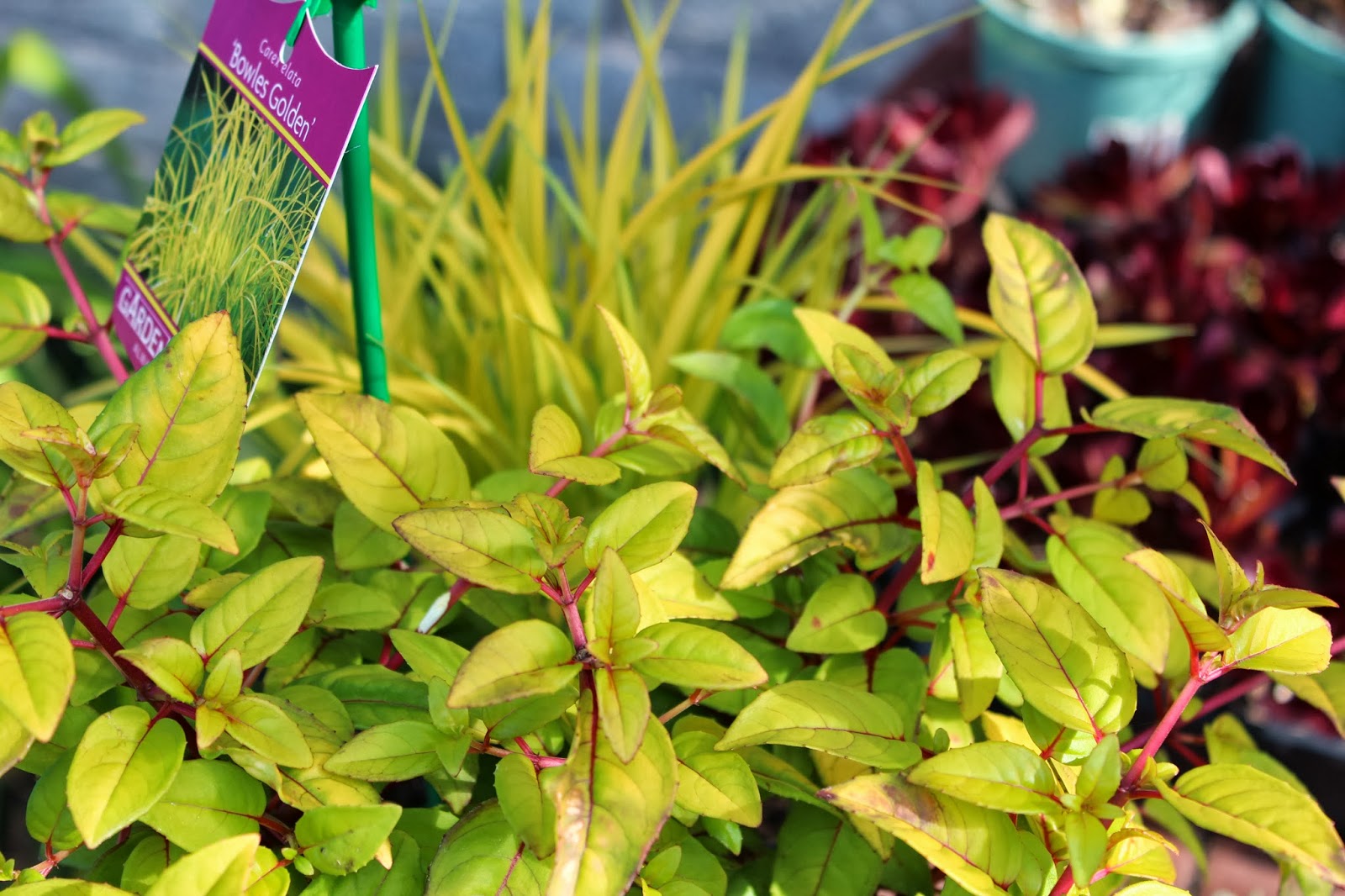
Carex elata 'Bowles' Golden'


Carex elata 'Aurea' syn 'Bowles' Golden'
In the chapter on 'Aquatics', in his book My Garden in Summer (1914), Edward Augustus "Gus" Bowles (1865-1954) leads us on a 'boy's own adventure' along rivers and reed beds across the Norfolk Broads where he happened upon this plant one hundred years ago. 'I noticed two or three shoots of a sedge with a fine gold band on their leaves, so dropped on my knees and severed them from the main tuft with my pocket knife, brought then home, and planted them where they have formed this fine specimen.' His 'home' was Myddleton House in Enfield where he established a remarkable plantsman's garden which is now restored and open to the public.
At this time of year, Bowles' Golden Sedge awakes from winter dormancy and puts on a fresh display of bright yellow leaves, eventually reaching a height of about 40cm and spreading to form a clump of 90cm. It is ideal as a pond edge plant or in a spot which is constantly moist and though it will tolerate full sun I find the foliage burns easily if not given some protection.

It could be planted around the base of Fuchsia 'Canary Bird' which has contrasting red stems to its equally bright yellow leaves.
 
 Front cover photograph shows Rosa moyesii 'Geranium'. This book was published in 1914 by T. C. and E.C. Jack, London and reprinted by Timber Press. Portland. Oregon in 1998.
It is available online as a free digital download.

Gus Bowles: Gentleman Gardener
1865-1954
Photograph: 1910, Florence Darrington

Saturday, September 7, 2013

Azalea indica 'Magnifica'

 Azalea indica 'Magnifica'
If you live in an older suburb in a capital or regional city of Australia chances are you will see this shrub in flower at the moment. Hard to miss with those incredibly bright magenta flowers, and, as this year has given us a dry spring, they are looking very fine as rain spoils the show very quickly turning the petals brown overnight.  The big old shrub Azaleas which grow up to 2 metres are very hardy but are probably considered old fashioned these days even though they make great hedge plants or clipped specimen shrubs such as this one. Is it is their susceptibility to insect damage during the growing season that has made them less popular? If you give them regular doses of fertilizer and compost as well as consistent water they usually are less prone to bugs and look much happier.


Wednesday, September 4, 2013

Nemophila 'Baby Blue-Eyes'

 Nemophila menziesii 'Baby Blue Eyes'

 Nemophila menziesii 'Baby Blue-Eyes' (Hydrophyllaceae)
This is the first time I have grown this spring annual, a former Californian wildflower which has made the transition to popular garden flower world wide. I was interested to know more about it when I read about the Nemophila Harmony Festival held during May in Hitachinaka, Ibaraki, Japan. The whole hillside of the Hitachi Seaside Park turns pale blue during the Festval. Why this flower? I have no idea but it looks amazing.
It is certainly easy to grow. I planted the seeds in early winter and only lost a few seedlings early on to snails who mowed down the tender young ferny leaves overnight. It is a soft and fairly delicate looking plant but reasonably tough, forgiving if you forget to water it, by springing back to life after wilting. Though regarded as a shade loving plant I am growing a batch in pots in full sun and these can be moved if the expected 30C days come next week. An ideal garden spot for it would be growing in humus enriched soil under deciduous trees.
As mine are just coming into flower now I shall update this post after they have finished so as to give an indication as to how long it performs.

Nemophila Harmony Festival
Hitachi Seaside park
Ibaraki, Japan

Saturday, August 31, 2013

Corsican Mint, Mentha requienii

 Cheers to spring with Le Grasshopper cocktail
made fresh with Corsican mint
 Corsican Mint, Mentha requienii
Recently I have been hanging out at some French websites and blogs looking for information on this, one of their native plants. I was able to discover the history of the man behind this mint as well as a terrific recipe for mousse au chocolat which uses Corsican mint as an ingredient. 
I grow mine in a pot with a saucer of water underneath. It likes a cool shady spot and pictorial labels at nurseries will often claim it can be grown as a ground cover between paving stones and walked on, however the climate here is too dry and variable for this to be achieved without sub-surface irrigation and a lot of spare time to weed amongst the "carpet". Good luck to those who try. In a pot it can be kept on a table where it can be stroked like a pet cat to release the fragrance from the leaves and to recall the eminent Frenchman Esprit Requien (1788-1852) who grew up in Avignon and had a great passion for the natural world of plants and animals found in his region. He is forever remembered in that city by the natural history museum he helped establish, Le Museum Requien at 67 rue Joseph Vernet, as well as for his conservation efforts to save the medieval parts of the town from demolition during the 19th Century. As a young botanist he travelled to Corsica, documenting the flora of the island, and naming many new species. Imagine his delight at discovering this mint and how pungent and fragrant the leaves would have been to his senses especially if the day was hot and he had found a shady spot to rest. Requien obviously fell in love with the island and died at age 64 at Bonifacio, a town in the extreme south of Corsica, a place where the language merges with the Italian of Sardinia just across the water.
Buste d'Esprit Requien, Botanic Garden, Avignon
photo: Veronique Pagnier
Requien was one of the first scientists to develop the concept of "phytosociology" in his work with the flora of the famous Mont Ventoux describing how different plants and animals are associated with different altitudes.
 

Esprit Requien (1788-1852)
Recently the Museum Requien held an exhibition on Australian fauna and flora. I am sure he would have found this country a fascinating place to visit.

Sunday, August 25, 2013

Geranium x monacense 'Muldoon'


Geranium x maonacense 'Muldoon'
Not another 'bloody cranesbill' I hear you say; to use a really bad horticultural pun. I have been growing this geranium for about a year and this is the first time I have had flowers from it. I have to admit to being a bit underwhelmed by the flower colour which could be described as a muddy purple, though the centre white circle does bring it to life somewhat. I 'photoshopped' the colour to make it more of a cerise pink so you will have to take my word for it. This plant is a hybrid between G. phaeum and G. reflexum ,so has the tall wispy flower stem of the former and the reflexed petals of the latter. It is an absolute shade lover and only flowers in spring and early summer. By mid summer expect it to look a bit scruffy, as mine did last year, so perhaps this one is really more suited to a fairly cool temperate climate. The lobed leaves have an interesting purple black mark on their edge and mine is showing a bit of white variegation though this may disappear over time. 
 I can only really muster faint praise for this Geranium as it has little to offer compared to varieties such as G 'Khan' or G 'Rozanne' with their showy cupped flowers.

Saturday, August 10, 2013

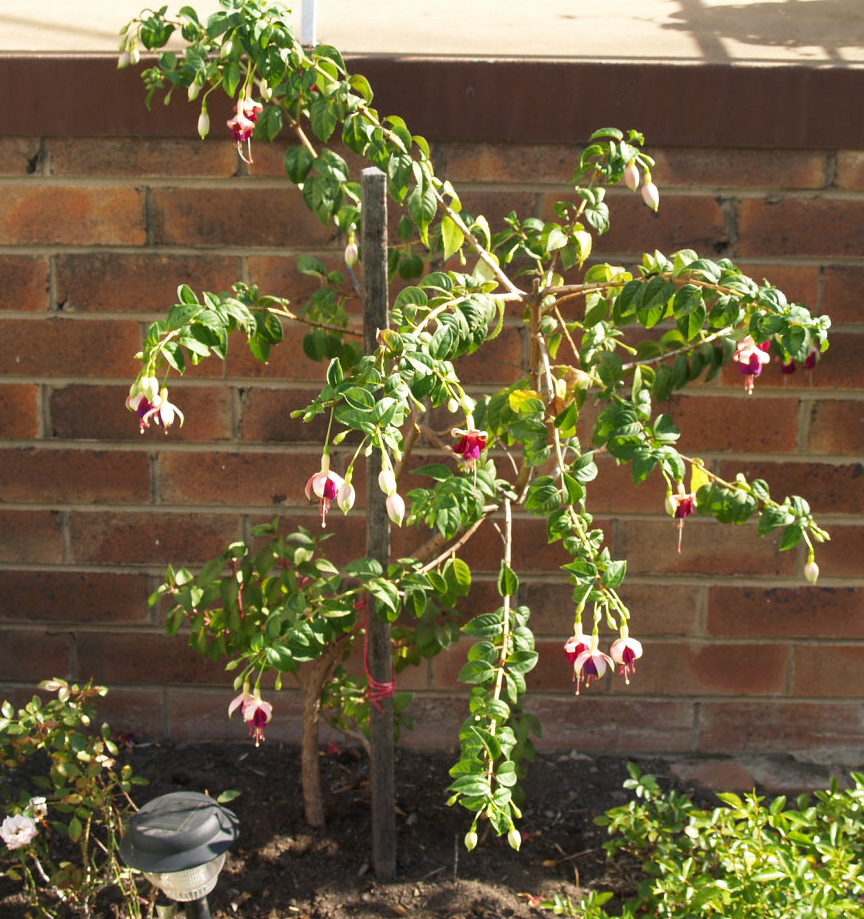
The Bogan Fuchsia

The inclusion this year of the humble garden gnome in the RHS Chelsea Flower Show could be seen as a sign that any expression of gardening from whatever class or background you come from is justified and should not be judged on matters of taste. In Australia the celebration of the suburban bogan is certainly welcome on our TV screens.
In Australian literature, Patrick White had great affection for bogan characters in his dusty suburban Sarsparilla of the late 1950's and early sixties. In the short story Down at the Dump, the garden of Wal and Isba Whalley has a big Camphor Laurel tree (Cinnamomum camphora) which is 'lopped back every few years for firewood', its trunk scarred by son Lum who slashes at the bark with a knife 'because it was something you did'. Out back standing in knee high paspalum grass is the two-tone Ford Customline...'it looked stolen and almost was ...the third payment overdue' while the twins Barry and Garry, looking like a couple of 'taffy brumbies', play in a rusty boiler they use as a cubby.
Across the road in a liver-coloured brick home with a cream Holden Special in the driveway lives Councillor Les and Myrtle Hogben and their daughter Meg. On the cool side of the house grow tall fuchsia bushes with a ground cover of aluminium plant (Lamium galeobdolon) Meg, dressed in her brown school uniform, is thin and freckly with the eyes of a 'mopey cat'. She hides from her mother, 'standing amongst the fuchsia bushes looking out from their greenish shade. Her skin was green except where the war between light and shade worried her face into scraps: and the fuchsia tassels trembling against her unknowing cheek, infused something of their own blood, brindled her with shifting crimson. Only her eyes resisted.'
White wrote later of these characters in 'Letters' (edited by David Marr) ....but Meg Hogben and Mum Whalley are the pure, the truthful, those of whom we may have hopes in the future.' 

Friday, August 9, 2013

The Victor Lemoine Fuchsias

2011 poster from an exhibition to celebrate the life of renowned French nurseryman and plant hybridist, Pierre Louis Victor Lemoine (1823-1911) in Nancy, France.

 1849 was a good year for Victor Lemoine. He was 26 years old and he had persuaded his father to lend him the money to set up a nursery on the Rue de l'Hospice in Nancy. On his bookshelf he probably had a copy of Felix Porcher's Le Fuchsia: son Histoire et sa Culture, La description ou l'Indication de 520 Especes et Varietes', the second edition of which had appeared that year, and, from his Belgian friend and mentor Louis Van Houtte he had no doubt received a copy of the horticultural magazine La Flore des Serres et Jardins de l'Europe which contained the van Houtte illustration below of Fuchsia venusta, a Colombian species first collected and described by those intrepid plant hunters Humboldt and Bonpland.

 During the course of his working life he went on to release some 400 garden Fuchsia hybrids including two derived from this species 'Gerbe de Corail' and 'Corne d'abondance' in 1905 , a first for horticulture. Many of the varieties are still around today and over the course of a century have found their way to Australia. The Lemoine bred 'Lord Byron' is readily available from specialist growers.

Fuchsia x 'Lord Byron'
While regarded as a taciturn man and a poor keeper of records, the names he chose for his Fuchsias speak volumes about his tastes, interests and which people commanded his attention in the world of politics, the arts and sciences. 
Going through his catalogue has given me an insightful french history lesson. To mention but a few, there is Pierre Beaumarchais (1732-1799) who was a playwright, fugitive, spy, horticulturist, arms dealer and revolutionary; the radical left wing politician Pierre Joigneaux (1815-1892) who managed to write a few gardening books while imprisoned: L'art de produire de bonnes graines...... 'The art of producing good seed' amongst them; and President Felix Faure (1841-1899) who is now remembered for dieing whilst engaged in la pompe funebre with his thirty year old mistress. (another untranslatable French pun)
Lemoine was obviously a big opera fan as Charles Garnier (1825-1898), the architect of the Paris Opera, Palais Garnier, and stars Lucienne Breval (1869-1935) who is remembered for her performance of Rameau's 'Hippolyte et Aricie' as well as the soprano Emma Calve (1858-1942) all have fuchsias named after them.
A year or so after his death, and with his family continuing the nursery business (It operated till 1960), a fuchsia is named in honour of Mrs Jacques Feuillet (nee Marie Hout) (1864-1912) a causality of War who died while working as a Red Cross volunteer. It is a sad reminder of our own involvement in The Great War which began just two years later.

 French writer Marcel Proust, who had a keen interest in gardening and plants was probably familiar with Lemoine's Nursery when writing his A la recherche...Remembrance of Things Past, and, a keen eyed plant detective ,with way too much time on their hands, could probably identify the lusty and impious variety growing in the window-box of Mme Loiseau's house which stood cheek by jowl to the Combray village church 'Saint-Hilaire': 'In vain might Mme Louiseau deck her window-sills with fuchsias, which developed the bad habit of letting their branches trail at all times and in all directions, head downwards, and whose flowers had no more important business, when they were big enough to taste the joys of life, than to go and cool their purple, congested cheeks against the dark front of the church, to me such conduct sanctified the fuchsias not at all; between the flowers and the blackened stone against which they leaned, if my eyes could discern no gap, my mind preserved the impression of an abyss'......