Showing posts with label edible plants. Show all posts

Sunday, April 1, 2018

Finding the perfect chilli

Last year I saved seed from what I thought was the perfect chilli. By that I mean one which has the right amount of heat for my taste and one which can be used either whole and green in say a vegetable curry or chopped and red in sauces and marinades.
The bonus with this one is it dries well even on the bush and produces enough for year round use.
Don't know what variety or origin this one is but would be interested to know.

Wednesday, March 1, 2017

Queensland Arrowroot/Achira, Canna edulis

Queensland Arrowroot or Achira: Canna edulis

You know when a plant has reached a peak of popularity when you starting finding discarded specimens at the rubbish tip. This is where I picked up a clump of Queensland Arrowroot, on the ground as a thick tangle of rhizomes, roots and tatty large leaves. In recent years it has been made popular by Permaculture gardeners who want to grow a starchy root vegetable or quick growing screen plant/windbreak or source of leaves to use as mulch. It is even tolerant of a light frost and is certainly ok in a boggy poorly drained site which is where I planted three small pieces of plant. Off it went like a rocket over summer and is now a thick mass of stems about 2.5 metres tall. I am not sure whether I want to harvest it and extract the starch. Arrowroot was always included in the 'Invalid Cooking' section of cookbooks in Australia, in between such delights as 'toast water' and 'gruel'. My copy of The Golden Wattle Cookbook, published as late as 1976, has the recipe for 'Milk Arrowroot' straight after lemonade. I know which I would prefer. If you grew up in Queensland you may even remember having a slice of 'sand cake' for afternoon tea which is made using arrowroot in equal quantities with butter and sugar plus 4 eggs. Cake was better than being offered a plain Arnott's Milk Arrowroot biscuit.

Australia's favourite biscuits

From around the 1870's onwards, Queensland arrowroot was grown commercially in the Pimpama district which is about 45 km south of Brisbane.

Kanaka slave labour was used to harvest rhizomes of arrowroot until the practise of 'blackbirding' was outlawed after Federation.


Tuesday, May 13, 2014

Winter savory, Satureja montana

 Satureja montana (Group) Lamiaceae
'Winter Savory' , 'Sarriette',  'Ajedrea'
The great American botanist and garden writer, Helen Morgenthau Fox (1884-1974), details her 'discovery' of this herb in her 1952 essay 'Notes on a Few Savories'.......(botany meets herbes et aromates de Cuisine) While Mediterranean herb plants were difficult to procure in the first decades of the 20th century she was lucky enough to be sent seed of different Satureja species from a Swiss Nurseryman, Henri Correvon, though the resulting plants were to have their species status stripped from them and instead were later just grouped under S. montana. 
This prostrate form which is sometimes given the name 'Nana' is similar to S. spicigera though the latter has longer leaves. It is a terrific herb for slow cooked winter dishes, say, 'le cassoulet' with plenty of beans. Just a pinch though as the flavour is strong.
What I really like about this plant however is its venerable shape similar to an old arching tree. Of course this makes it the perfect candidate for a bonsai pot.

Tuesday, February 25, 2014

Florez Pop-Up

 Aloha! 
This Sunday March 2nd Florez Nursery will be selling plants at a 'Pop-Up' shop in Sydney.
Where : Home of garden designer Peter Nixon whose garden will be on view as part of Open Gardens Australia.
Address: 52 Lander Street cnr. Shepherd Street Darlington (near Sydney Uni)
Open 10am to 4pm rain or shine 
I look forward to seeing you all there.
Here are some of the plants you may expect to find:
 Hibiscus and Brugmansia
 Medinilla species
 Pentas 'Candy Stripe'
 Allamanda 'Siam Snow'
 Miscanthus 'Cosmopolitan'
 Gardenia 'Forever More' from Vietnam
 Succulents
 Orange Browallia
 Ervatamia coronaria
 Quisqualis 'Red Riot'
 Daintree Pine
 Organic sage
Sun hardy Bromeliads

Monday, September 16, 2013

Microgreens & edible flowers:Art on a plate.

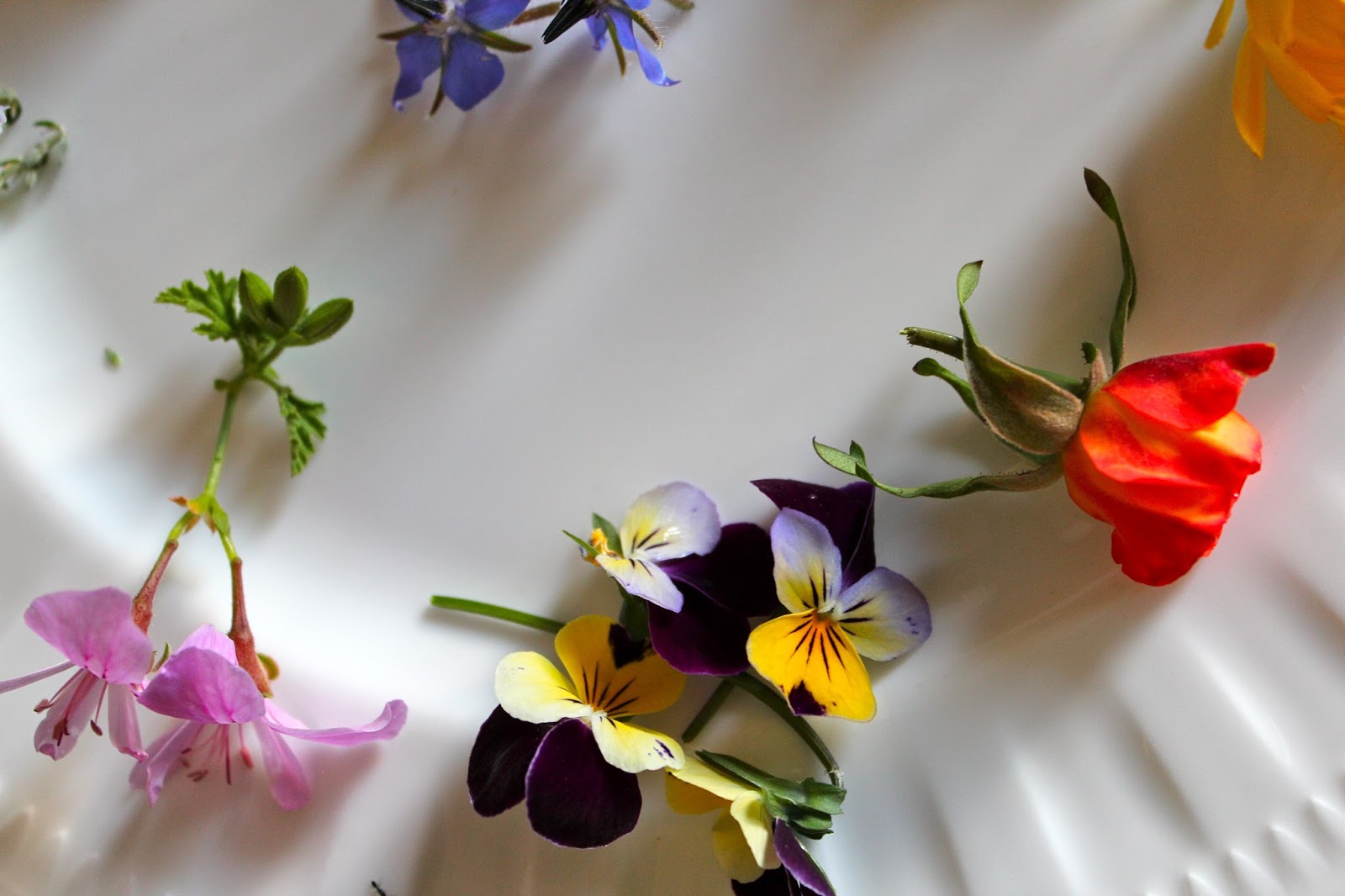
Edible flowers(clockwise from top): Dianthus, Star flower, Calendula, Rose, Viola, scented Geranium, Rosemary, Nasturtium, and Borage in centre
A quick walk around the garden and it is easy to find a selection of flowers which can be used for special occasion meals or for using day to day in a salad or vegetable dish. My tip is to use whole flowers as decoration and just petals if they are going to be eaten. Some flower flavours are quite strong. Nasturiums are hot and peppery, Star flowers taste strongly of garlic, while Borage can be coarse and bristly if you leave any stem in place. Moderation is the way to go and if you are uncertain about whether a flower is edible best avoid it , however pretty and decorative it may look. I'm thinking of the very poisonous Oleander flower as an example.
Microgreens have finally gone mainstream after years of being the exclusive preserve of fine dining chefs. A few weeks back I was reading Gardening Australia magazine in the newsagent, as you do, and noticed a small pack of Mr Fothergill's Microgreens Seed attached to the cover. I didn't have time to find out whether there was a story in the mag on them as I was given one of those 'this-is-not-a-library-mate' looks from the guy behind the counter. "Yeah OK mate I'm just a ten cents a dance nurseryman" I thought as I put the mag back.
I have to admit to being a bit sceptical about the taste of Microgreens given that they have been marketed as a newer and better version of sprouts and originate from their spiritual home of southern California. I have never been a huge fan of sprouts having eaten too many takeaway salad sandwiches crammed full of sour tasting ones of the alfalfa or mung bean variety.(Snowpea sprouts are OK) However once you try Microgreens with their clean fresh taste and crunchy texture you are hooked. If they have not been given the tag of 'superfood ' then they certainly deserve it.
Mr Fothergills have several different packs available including 'Mediterranean Flavours' of Italian Basil ,Rocket and Sunflower and 'Flavours of Western Europe' which includes Cress, Pea 'Morgan' and Red Amaranth. They also offer a tray kit so you don't need to muck around with soil to grow them in.

The kit consists of a plastic tray which sits on top of a reservoir which is filled with water. You need to place the seeds on a damp piece of tissue paper and as the seeds germinate the roots grow down through the tray into the water. The seeds need to be sprayed with a fine mist of water to keep them moist until they germinate. Now this is where I came unstuck and got it wrong. My horticultural "expertise" went out the window and I tried growing three different types of seeds at the same time, forgetting the basics about different rates and times of seed germination. So in this case the cress was up and running after a couple of days followed by the peas by which time I had already snipped off the growing cress, while it is not really warm enough yet to grow the Amaranth as it is a true summer plant.


Don't be alarmed if the tissue on which the seeds germinate turns brown. This is just stain from the tannins in the seed coat as it is cast aside when the first 'cotyledon' leaves emerge.
The tray growing kit is ideal for apartment dwellers who don't want to muck around with soil and it also has the advantage of being able to be placed directly on a meal table allowing guests to snip off the fresh leaves if they so desire. It would certainly be a real talking point.
So my microgreens education has only just begun and I hope to perfect the art of growing them over the coming months with more photos to add to this post.
The link to the Mr Fothergills web page is below.

Seeds, Vegetable Seeds, Flower Seeds and Herb Seeds

Sunday, June 17, 2012

Cos lettuce

Cos lettuce surrounded by winter hardy tomato seedlings
When you grow your own lettuce you can afford to be a bit wasteful especially when you have half a dozen or so all ready at the same time. With Cos lettuce it is the inner pale yellow leaves which I like the best. They have plenty of crunch and being spoon shaped you can load up all sorts of filling onto them in say a typical Caesar salad for which they are ready made for.  In her Kitchen Garden Companion book, Stephanie Alexander recommends arranging the leaves of Cos on a platter rather than in a bowl for the perfect Caesar salad. The leaves are coated with a Parmesan dressing which is made in a food processor by combining Parmesan, anchovy fillets, Dijon mustard, lemon juice and olive oil with a couple of lightly boiled eggs. I like to add pieces of grilled chicken to my Caesar as well as Avocado, bacon and croutons made from sour dough bread.The perfect lunch at any time of the year.
Cos lettuce originated on the Greek Island of Kos, though it is also given the name Romaine.
 

Saturday, June 16, 2012

Chickweed, Stellaria media

Chickweed,  
Stellaria media (Caryophyllaceae Carnation Family)
Chickweed makes an appearance every winter in the garden and in potted plants. It forms quite a thick mat of loose succulent leaves topped by starry white flowers and seed capsules containing many orange seeds. Wild food foragers may be familiar with this universally occurring plant, using it as a tasty addition to salads and soups. I find the taste a bit bland and because the stems are covered with tiny hairs it is not always easy to swallow without inducing a coughing fit. As a herbal plant it is useful for making a poultice to sooth irritated skin. Apparently it is also possible to make a salve from Chickweed as well where it is mixed with beeswax so it can be applied for a longer period. I am not a regular user of herbal remedies but this one seems to work and from such a common garden plant.
As the common name suggests it is adored by chickens who love to scratch and pick out the oil rich seeds.

Sunday, May 6, 2012

Oliver Sacks on Cycads

'We moved past great coral canyons, with their endless forms and colours and their gnarled and twisted branches, some shaped liked mushrooms, some like trees, being nibbled at by tetrodons and filefish. Clouds of tiny zebra fish and fish of an iridescent blue swam through them, and around me. We saw flatworms waving like tiny scarves in the water and plump polychaetes with iridescent bristles. Large starfish, startlingly blue, crawled slowly on the bottom, and spiny sea urchins made me glad my feet were protected by fins'..................... Oliver Sacks from The Island of the Colour-blind.
 

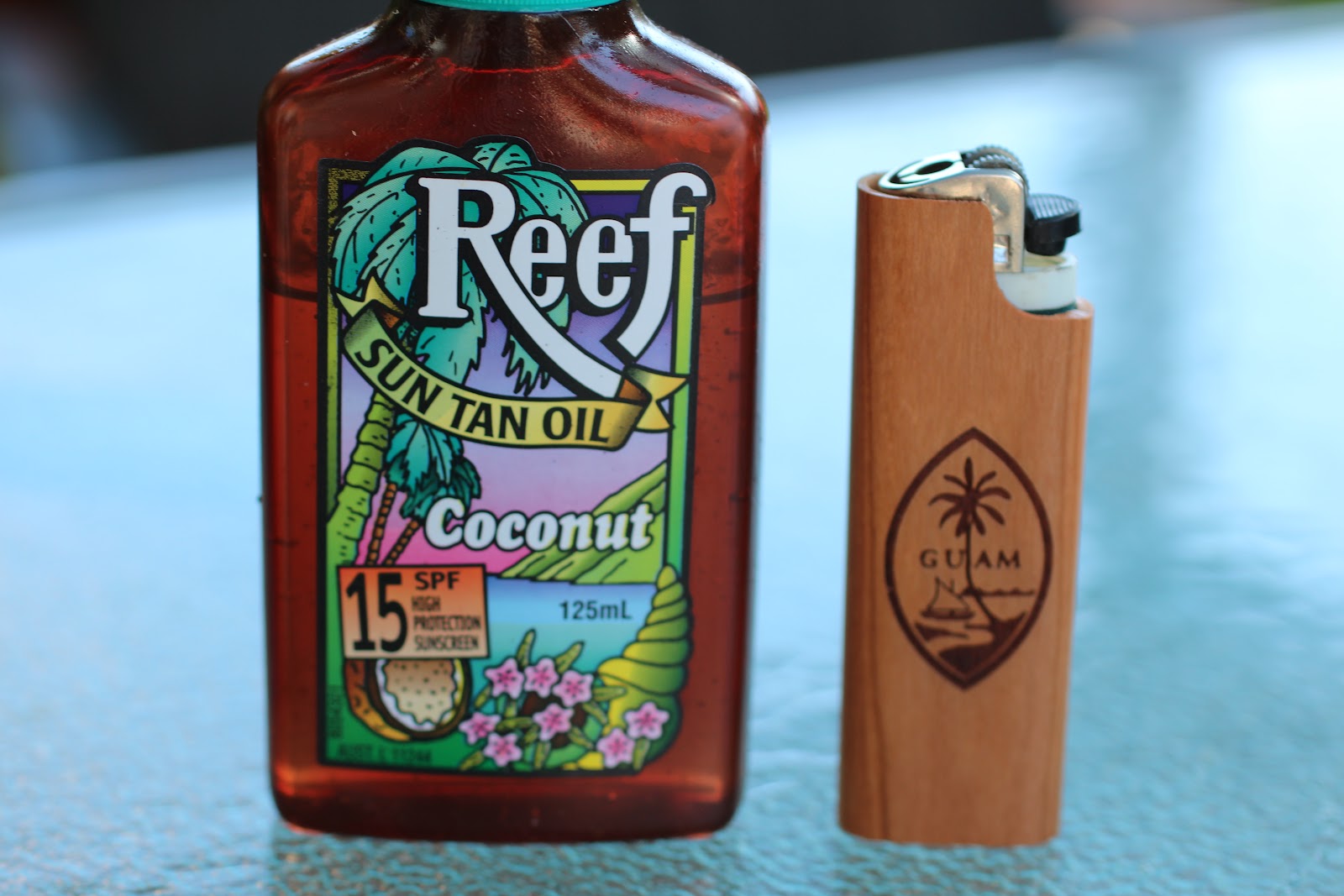
The idiosyncratic and wonderfully humorous Dr Oliver Sacks had a reason for snorkeling in Pacific coral reefs. He was in search of the perfect shade of indigo blue, a colour which he saw in a vision while partaking in illicit substances during his younger days. This aspect of his crowded mind was not included in this book as the focus was on bringing attention to those who suffer from colour-blindness or Achromatopsia, where it is a hereditary condition on the islands of Pingelap and Pohnpei. The second half of the book centres on the Cycad islands of Guam and Rota where a progressive and fatal neurodegenerative disorder afflicts a high proportion of the inhabitants.

Picador books (published by Pan Macmillan Australia in 1996)


While visiting Pohnpei, Sacks partook in a ceremony of drinking Sakau or what we call by the Fijian name of Kava. The video is included below.The sakau plant, Piper methysticum, was named by father and son German naturalists, Johann and Georg Forster, who accompanied Captain James Cook on his second voyage to the South Pacific in 1772 after Joseph Banks withdrew at the last moment. They called it rauschpfeffer or intoxicating pepper and in their diaries they recount the preparation of the sakau for drinking by Islander men inside Cook's cabin: It is made in the most disgusting manner...the root is cut very small, and the pieces chewed by several people who spit the macerated mass in a bowl when some water of coconuts is poured over it.
Sacks describes his encounter with sakau eloquently. It brought on an 'unctuous mellifluous flow of thought so far from my anxious, querulous frame of mind.'

 Kava, Piper methysticum (photo by Forest and Kim Starr on Wikimedia)
Another species of Piper from New Zealand was named in Cook's honour, P captaincookia.

German naturalists Johann Forster (1729-1798) and Georg Forster (1754-1794) 
Portrait from 1775 in Tahiti.

Cycas revoluta  
Japanese Sago Palm
 The Cycad botany from this book is equally as interesting though since it was written the origin and age of Cycad species is no longer considered to be from the Jurassic age.The most common species grown here and widely used in the landscaping industry is Cycas revoluta. Eminent Australian naturalist David Jones is quoted on this species and he recounts how the seeds of this plant are used on the Ryukyu Islands of Japan to make a form of Sake. Drinking it is almost as deadly as a game of Russian roulette, since it is slightly poisonous and occasionally a potent batch kills all those who partake. Eat with a meal of puffer fish or fugu!
Welcome to the wonderful world of plants Oliver Sacks style.
R.I.P Oliver Sacks 1933-2015


Sunday, February 12, 2012

Apium graveolens var. secalinum, leaf celery

Leaf or Chinese celery, Apium graveolens var. secalinum
If you live in a warm climate this is the celery to grow, as the more common stalk celery, Apium graveolens var dulce, which originated in Italy, really requires a cool climate to develop tender long, mild flavoured stalks. Leaf celery grows for a couple of years before being spent and provides a plentiful supply of tender shoots which are indispensable when making stock ,soup or stews. They can also be added to stir-fries. It needs regular water during the growing season and a thick mulch around the plants is beneficial. Mulch can also help to blanch the lower leaf stalks which gives them a better flavour. This leaf celery is also a fairly common wild foraging plant being found in marshy swampy areas usually close to the coast, though the taste may be stronger than a cultivated plant. As the leaves resemble flat leaf parsley, it was marketed a few years back as Australian sea parsley but given our fairly conservative and unadventurous taste for new things it disappeared from the nurseries fairly quickly.


Friday, February 10, 2012

Chilli variety 'Purple Tiger'


Ornamental Chilli 'Purple Tiger' 
 Capsicum annuum cv.
This is an ornamental variety of chilli which can be eaten though it is not particularly flavourful. The shiny black pendant fruits make a terrific table or plate decorative particularly when teamed with 'Black Russian' tomatoes. In the garden, the creamy grey and pink flecked leaves match well to plants like dark opal basil which has bright magenta coloured flowers. Some silver foliage, from say a Cineraria, the "silver dust" plant, is a good foil to this combination also.
As this is the first summer I have grown this variety,I am assuming it may well keep on fruiting for quite some time and I may just get a second year from the plants if they are kept a bit drier over winter. Other varieties with these black or dark purple fruits include 'Jigsaw' and 'Black Cuban'. 'Purple Tiger' also goes by the name of 'Trifetii'.

Tiger Hunt (detail) depicting Mughal Emperor Akbar (1556-1605)
Victoria and Albert Museum ,London
Akbar is shown on the brown steed beheading the purple tiger with his scimitar. One hopes this is a pure fantasy depiction from the book of his fantastic exploits. The playboy emperor was well aware of the need to appear larger than life to sustain his popularity and dominate his surroundings, though paintings like this could have been used to intensify the experience of being in a cool, sumptuous and safe Mughal garden with its voluptuous sense of luxury.
I am in need of a time machine right now to take me back to the 16th Century Persian style of gardening without the senseless killing of tigers.

Wednesday, February 1, 2012

Tomatillo, Physalis ixocarpa

Purple Tomatillo  
Physalis ixocarpa

Both the tomatillo and its close relative the Cape Gooseberry (Physalis macrocarpa) are welcome weeds in my garden . They set fruit during late summer and autumn and then return again the next year without any trouble or special cultivation. Though green is the normal colour for the tomatillo, even when ripe, the purple variety pictured here is slightly sweeter and less tart flavoured. An article I was reading about them in the Los Angeles Times called the tomatillo "a green sourpuss with a sweet side".
I use them to make salsa to have as an accompaniment to barbecue chicken or prawns, from recipes obtained from the terrific little book pictured below. One called salsa tepozteco includes the unusual ingredient of an avocado leaf which is toasted first and then ground. It has a warm anise flavour when used in this way. I don't have an avocado tree but young seedling trees are always coming up in my compost from discarded pips. Tomatillos are also good to use in gaucamole verde and can be used to replace the normal lime juice as a key ingredient.
I guess the reason the tomatillo has never made it onto the supermarket shelf is that they have to be fairly ripe and soft to have the best flavour very much like a real tomato which is best when picked fresh and used straight away.They are so easy to grow I am not sure why they are not better known.
Salsa by Reed Hearon
published by Chronicle Books
San Francisco


Asian eggplants

Laos or Thai eggplant variety (Solanum melongena)

The University of Melbourne web page called Know your eggplants (see link below) gives the most comprehensive rundown on the multitude of eggplant varieties grown across the world as well as information on where to source seed. This is the first time I have grown this small round Asian variety and from one bush I picked half a dozen or so to use in a Thai style green curry. The classic pea size eggplant is normally used in curries as they can be left whole and add a bitter contrast to a sweet, salty, chilli hot dish.
It has not really been hot enough for growing a great crop of eggplants this summer. I have another variety called the Brazilian orange square, (Solanum aethiopicum type) which has barely grown more than 15cm and seems unlikely to flower and set fruit at this late stage of summer. There is always next year...
Know your eggplants

Monday, January 30, 2012

Amaranthus viridis

Amaranthus viridis

It is more of a European thing to go foraging for wild weeds to use as food. There is a tradition in Greece to search out this Amaranth in Spring when the young shoots are at their most flavourful .It goes by the name of vrasta or vlita and is cooked and dressed with olive oil and lemon juice. However it is much more easy to identify in late summer when the green tassel like flowers begin to appear.

Thursday, January 26, 2012

Chilli variety, Numex Joe E Parker

NuMex Joe E. Parker Chilli Pepper, (Capsicum annuum)
I had only ever heard of Colonel Tom Parker and now I am growing the Joe E.version.
This is the number one green chilli grown in Mexico and the United States. It is called a premier cultivar because the plant exhibits strong main stem growth, uniform branching and a high yield. When cut in half it only has two cavities which makes for easy removal of the seeds and pith. I like the heat strength which is mild to warm, complementing tomatoes, red onion, mint and cucumber. I used this combination in a salad with Australian green lentils from Victoria.

Thursday, January 5, 2012

Gold Nugget Pumpkin

Pumpkin variety 'Gold Nugget' is always called a 'space saver' and indeed it produces an abundant supply of fruit in about a metre square. I planted this one in October and picked a couple within six weeks of planting. I will leave these on the vine, lay off the watering and enjoy their rich orange colour as a highlight of the vegetable garden.

Tuesday, October 4, 2011

Greek Sage, Salvia fruticosa

Salvia fruticosa 
 Greek Sage

For years I have been trying to grow the herb Sage, Salvia officinalis, without much success. The climate here is just too warm and humid and though the plant grows rapidly for a season or two, it turns up its toes as soon as February arrives. Greek sage is proving to be a much hardier plant with intensely aromatic leaves and beautiful lavender blue flowers covering the plant at the moment. Dried bunches of it are sold in my local greengrocer as Faskomilo or mountain tea. It is the kind of herbal tea which can be sweetened with honey and reputedly sharpens the memory and brings about a sense of well-being.
Salvia fruticosa was previously known as Salvia trilobata as the older leaves have two tiny "ears" or lobes at the base of the leaf. This form lacks the lobes so is probably a hybrid with a wild form of garden sage. It is found growing throughout the eastern Mediterranean including southern Italy, the Canary Islands and North Africa. It prefers dry rocky or poor soil or average garden soil with sharp drainage. Propagation is from seed or soft wood cuttings in spring. Leaves can be dried or used fresh in cooking, best sparingly as the flavour is strong.

2017 update: I have limited stock available.

Sunday, September 25, 2011

Bunya Nut, Araucaria bidwilli

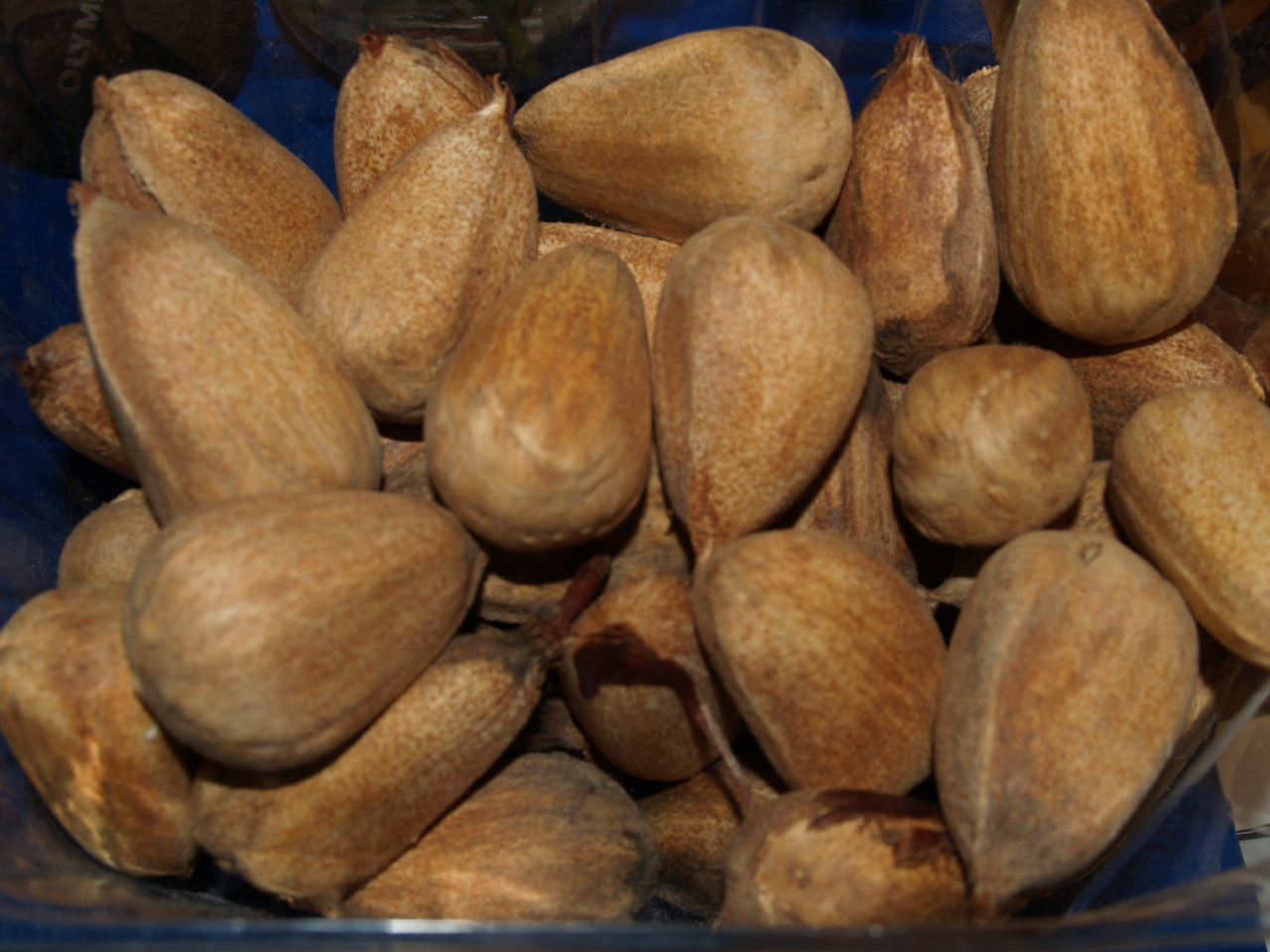
Bunya Nuts from the tree Araucaria bidwilli

Local tree growing in a park
A friend has just given me some Bunya nuts which I have not eaten for years as they are not the sort of thing you find at the local supermarket. The process of cooking them involves boiling them in their shell for 30 minutes and then leaving them to cool for 4 hours after which time the shell can be removed with ease. They have a flavour not unlike chestnuts and can be used in both sweet and savoury dishes. They are apparently gluten free and high in complex carbohydrates according to Vic Cherikoff writing in his book Uniquely Australian: A Wildfood Cookbook. He gives a selection of interesting recipes using bunya nuts including one with crocodile steak....mmm
It is unfortunate that the tree is so tall and with such prickly leaves, it is unsuitable for city gardens or parks.The cones containing the nuts are so large (30 cm) round they could be deadly if one were to be hit on the head as they drop to the ground

Drawings by Betty Maloney of leaves and cone of Auracaria bidwilli (right) and A. cunninghamii (left)

Glenlyon Drive in Ashgrove, Brisbane lined with Bunya Pines
The most famous avenue of Bunya Pines is in the Brisbane suburb of Ashgrove . These trees marked the driveway to Glen Lyon estate, the farm of Scottish businessman Alexander Stewart who built a house there in 1876. The trees remained after the property was subdivided in 1918 and the house became the home of the Marist Fathers' Monastery from 1930.
I am not sure how popular the trees are with local residents who have to deal with the falling leaves and cones.