Onion thrips, Thrips tabaci are important because they carry the disease spotted wilt which affects a wide range of plants including tomatoes and ornamental such as dahlias. This insect is found in all onion/leek/garlic growing areas of the world and is mainly a problem during warm dry weather and less of a worry during cool rainy periods. Thrips can be hard to detect at first as the young wingless creatures, which are pale yellow, congregate in the throat or 'chit' of the plant feeding on the newly unfolding leaves. The adults spend their time on the exposed upper surface of the leaf where they feed by piercing the the tissues and sucking on sap.The clever female thrips are able to reproduce without mating resulting in many generations being produced within a season. The female is a tiny light or dark brown insect about 1.3mm long with two pairs of narrow wings fringed around the margins with fine hairs. The male is smaller. Both are strong fliers and are easily carried by wind to infect a large area. Control can be achieved by inspecting the throats of young plants for early signs of infestation and spraying appropriately. Removing broad leaf weeds where thrips may lurk and providing good irrigation during dry weather helps keep this pest at bay.
FLOREZ NURSERY CLOSED For more information on plants featured here phone Ian on 0412 123 240 or email nurseryflorez@gmail.com Mailing Address: Post Office Box 143 Berkeley NSW 2506 Australia
Tuesday, August 10, 2010
Bolting in seedlings
Joy Larkcom goes into more detail about bolting in her excellent book, Oriental Vegetables The complete guide for the gardening cook. Her suggestion of growing seedlings in a module so that individual plants are able to develop a good root system is one way of overcoming the problem as well as germinating seeds at at reasonably high temperature of 18C degrees -25C. Low temperatures in the early stages of growth is the single most important factor leading to the initiation of flowers instead of leaves. Young plants need to clock up a certain number of heat units to prevent bolting : once this has been done they can be subjected to lower temperatures without damage.
Sunday, August 8, 2010
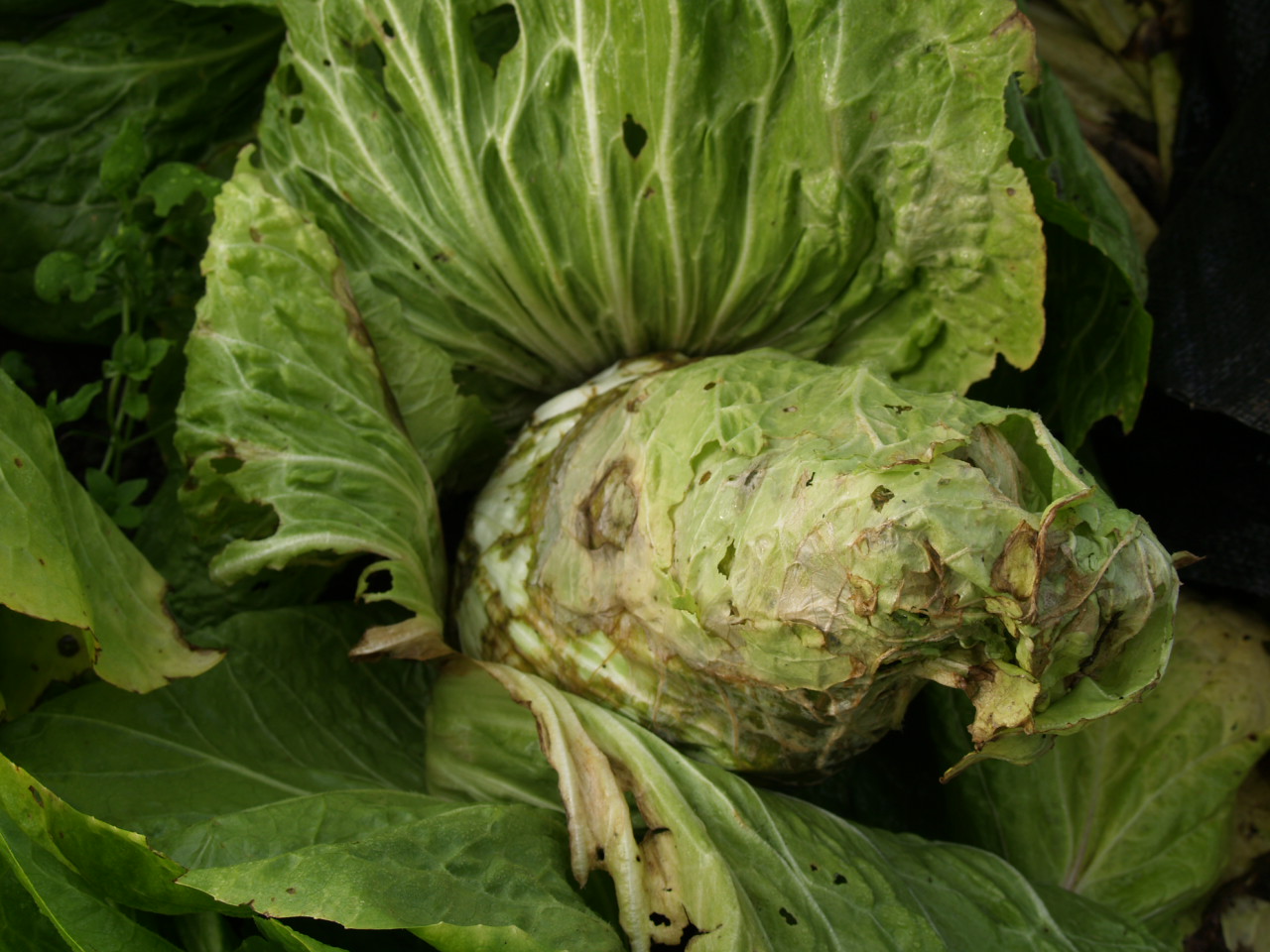
Plant pathology:Grey Mould on Italian Chicory.
Grey Mould (Botrytis cinerea) is a fungal disease which is more common during cool wet weather such as what we have been experiencing lately. Brown rotted areas appear at the heart of this Italian chicory variety and this can be accompanied by greyish furry growth. The plant will eventually collapse but should be removed at the first sign of any damage and placed in a bin.
European Earwig
European Earwig, Forficula auricularia(photo from Wikipedia)
Working at my community garden plot yesterday I encountered this insect for the first time. I have come across the smaller native species before but not this one. Peeling back layers of mulch they scattered everywhere, all with their forecep pincers raised in defence. Apparently this earwig was first recorded in New South Wales in 1934 and can be a pest amongst fruit and vegetable crops.In my case they had been dining on small seedlings and leaving them with a ragged appearance. A solution for dealing with them was given on Gardening Australia last night. Leave out a shallow dish of oil with some added soy sauce and the earwigs which feed at night will come running to it.
Friday, August 6, 2010
Plant pest Mites
Plant Mites are arachnids and thus related to spiders, ticks and scorpions. Most gardeners are familiar with the damage some of them can cause to foliage though they are barely visible to the naked eye and have often departed before their 'work' becomes noticeable. At the moment, I have a batch of the shrub Brugmansia ,the new growth of which displays stiff downward cupping on the top leaves and twisted older leaves. This is caused by the Broad mite (Polyphagotarsonemus latus) which is most active during warm humid summer/ autumn weather.The damage to the "Brug" was probably done months ago when the new leaves were quite tiny. The other mite of concern to gardeners is the 2-spotted mite (Tetranychus urticae). The warm dry weather of early spring suits this pest best. The first sign of an infestation is a speckling or mottling visible on the upper surface of the leaves. This is caused by the mites feeding on the underside of the leaves, where silver and rusty marking can be seen as well as some fine webbing. This mite has also been given the name of red spider mite as the adult females develop a red orange colour during winter. Plants which are stressed due to lack of water or low nutrient levels in the soil or pot are often more susceptible to infestation from this mite. So how to deal with them?...... I use the excellent Neem oil or a wettable Sulphur spray or dry Sulphur powder. You can also use biological control by releasing predatory mites (Phytoseiulus persimilis, Amblyseius womersleyi and Typphlodromus occidental) or ladybirds (Stethorus sp). These are readily available from specialist suppliers.
It is important also to remove mite host plants especially low growing herbaceous weeds. Mites are distributed around by wind, birds or man and can travel on clothing, garden tools and farm machinery. Keeping your plants healthy and having a bio-diverse garden with a range of plants to attract beneficial insects goes a long way to keeping the pesky little mites from doing much damage.
Tuesday, August 3, 2010
Houseleek, Sempervivum
I have this one pot of houseleeks and during winter the outer rim of the leaves take on a faint pink tone. A friend who collects succulents has an enormous range of these mountain loving plants but the finer distinctions between the species seems barely discernible to me. Some grow quite large and have black and purple leaves and others have that fine mesh of 'cobwebs' covering them.The old Dutch common name for Sempervivum is Donderbloom, or 'thunder flower' because to have it growing on the roof was a charm against being struck by lightening. The Greeks regarded it as an aphrodisiac and named it hypogeson because it grew on the high parts or eaves of buildings. The Old English name leac, from the Anglo Saxon became 'houseleek'. Other common names abound , the most interesting being 'Jupiter's beard', as it is under the dominion of Jupiter and symbolizes vivacity; and the very amusing 'welcome home husband however drunk you be'.
Sunday, August 1, 2010
Beauty & the Beast...a malodorous Arum
And for Arums there is always the 'back up plan'. Underground there are lots of starchy tubers which are slowly being manufactured, storing food and taking over the role of parent when the heat of summer makes the whole plant shrivel and disappear until autumn rains starts the cycle all over again.
Subscribe to:
Posts (Atom)