Showing posts with label Indoor Plants. Show all posts

Wednesday, March 21, 2018

Epipremnum aureum 'Frosty'


'Devil's Ivy' Frosty
Epipremnum aureum 'Frosty'
I have been growing this white variegated form of Devil's Ivy for several years now and find it more appealing than the yellow/gold form which has much larger leaves. I have several plants of it growing in different positions both indoors and out and at this time of year it is looking at its best, responding well to warm humid days.
The leaves are somewhat stiff in appearance and when unblemished it could be said the whole plants looks plastic or artificial. Perfect! Of course it does not stay that way for long and during winter many leaves develop burnt edges or drop off as a response to cold.
This is when the plant needs a rest, given minimal water and kept in a warm sheltered location, preferably out of sight as the temptation to bin a tired looking plant may overtake you.

Frosty......

Sunday, February 25, 2018

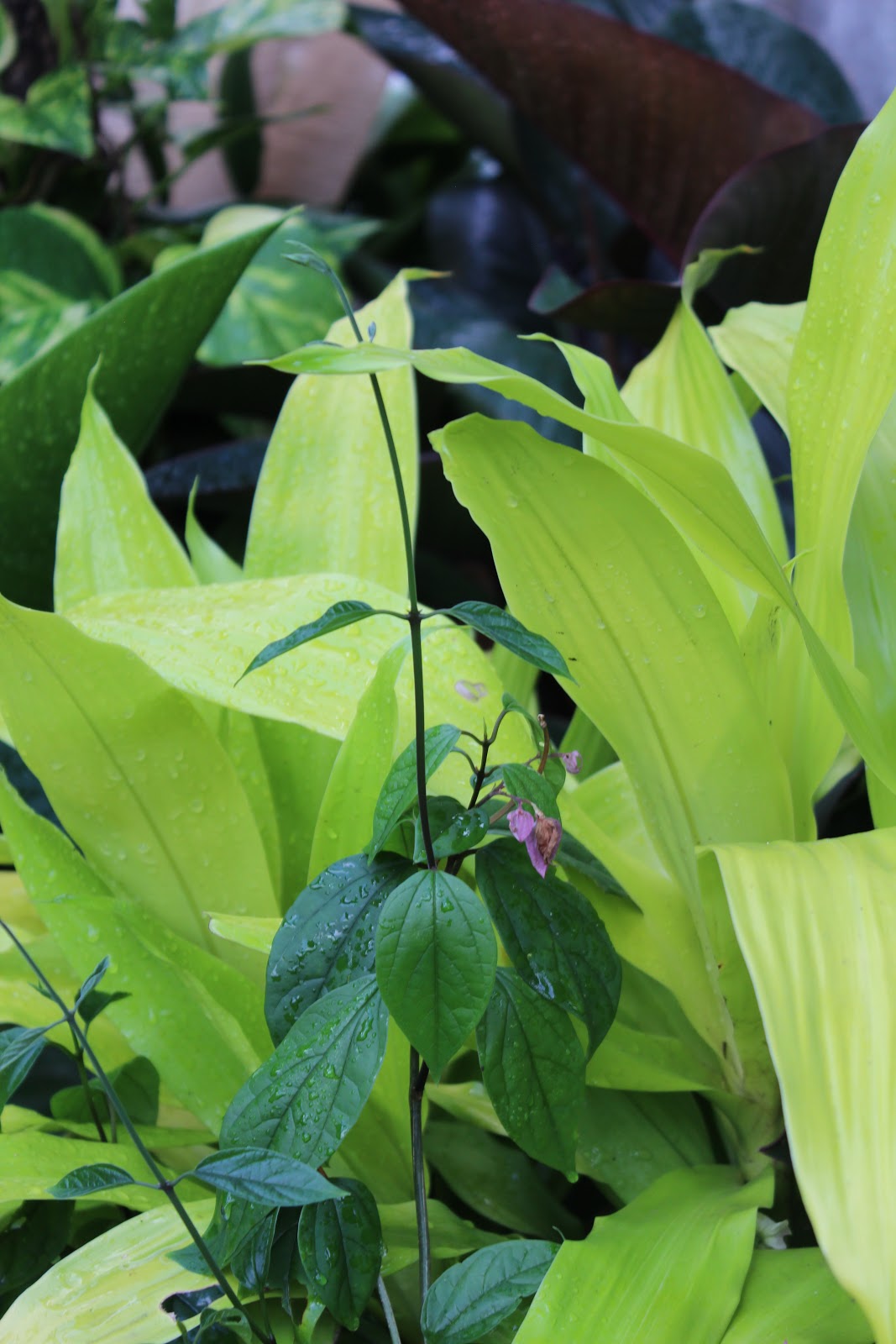
Dracaena deremensis 'Janet Craig Limelight'


 Dracaena deremensis 'Janet Craig Limelight'
The multi-branched garden planted specimen of this plant is now about three metres tall and growing under house eaves in a shady spot. It does not look half as good as the potted specimens I have pictured here which are in a greenhouse and sheltered from the elements.
 A few years back a large branch of the garden one toppled over in a storm so I cut it up into 30 cm lengths so I could propagate some new plants.
Stems cuttings from a mature plant take root quite easily though they require a free draining mix with lots of Perlite as part of the propagation mix. After a couple of years they have now grown to about 120cm in a 200 mm pot and I can almost say they thrive on neglect as they don't seem to mind a low water and fertilizer regime.
 I placed one of these indoors several months ago and though it has lost its very bright yellow leaves it still has attractive shiny pale green foliage.
With a bare trunk it has an elegant palm tree like appearance in a red ceramic container.
Outdoors the leaves rarely stay unblemished by strong winds or insects.
I am reminded of that other Dracaena (fragrans) which gets shredded by grasshoppers when grown outdoors in a warm climate. Many so called indoor plants just don't make the transition well when planted as garden specimens ,though some rejoice in their freedom and turn into monsters such as Ficus/'Rubber Plants'.


Platykelba insigne

Platykelba insigne (Ascelepiadoideae)


Simplicity itself is the appeal of a plant which goes through life as a mass of cascading stems while producing (allegedly) perfumed flowers. I have yet to see any flowers so I can't comment on that and it is always a little annoying when you read about a perfume with no description of the fragrance. Coconut? Vanilla? Honey? keep me guessing.
This is an easy care hanging basket or vertical garden plant and probably better in shade as mine has thrived under shade cloth. The hanging basket version is a bit lopsided as it was kept on a shelf for too long.

Orbea variegata

Orbea variegata syn Stapelia variegata
Developing seed pods in "V for Victory" mode

This spreading ground cover succulent has fleshy stems which resemble in size and shape crinkle-cut potatoes. Container grown plants quickly fill the space with these stems/leaves and new growth tends to hang upside down over the edge of the pot. These can be trimmed off and used to propagate new plants if required.
I have not tried growing it in a garden bed but I imagine it would form a dense weed suppressing mat and would be ideal to grow in a dry spot under trees particularly ones providing summer shade and winter sun.
The 8cm diameter flowers resemble puffed balloons in bud and when open exude the characteristic carrion smell to attract  flies as pollinators. Working close by to them I often forget this unfortunate aspect of their being and assume there is a dead rat somewhere under the bench.
The purple striped seed pods produced even while new flowers are still in bud are most attractive. Eventually they turn brown and scroll back to release fluffy seeds in much the same way as its cousin the Oleander does, both being in the family Apocynaceae.
Container grown plants can be brought indoors and placed in a bright location though this is not recommended during the summer flowering season. It is definitely a winter thing especially if you live in a frost prone location.


Tuesday, April 18, 2017

Philodendron 'Gold Bullion'


                     Philodendron 'Gold Bullion'
I have been growing this for about a year now in a pot on the deck in a semi shaded position and noticed this week that some of the leaves are changing colour in response to cooler weather. The leaf veins are developing a delightful pink tinge.
This Philodendron is related to 'Xanadu' and is just as hardy as long as it is given some protection from frost. In a garden situation 'Gold Bullion' could be mass planted under trees as it is able to cope with dry shade and the leaf colour would certainly add brightness and vigour to the garden picture.
It is equally at home as an indoor or balcony plant and its low water requirements means means it can be left unattended for a period of time without looking back.
There does not seem to be any insect or disease problems associated with it either. Ten out of ten. 

Sunday, October 26, 2014

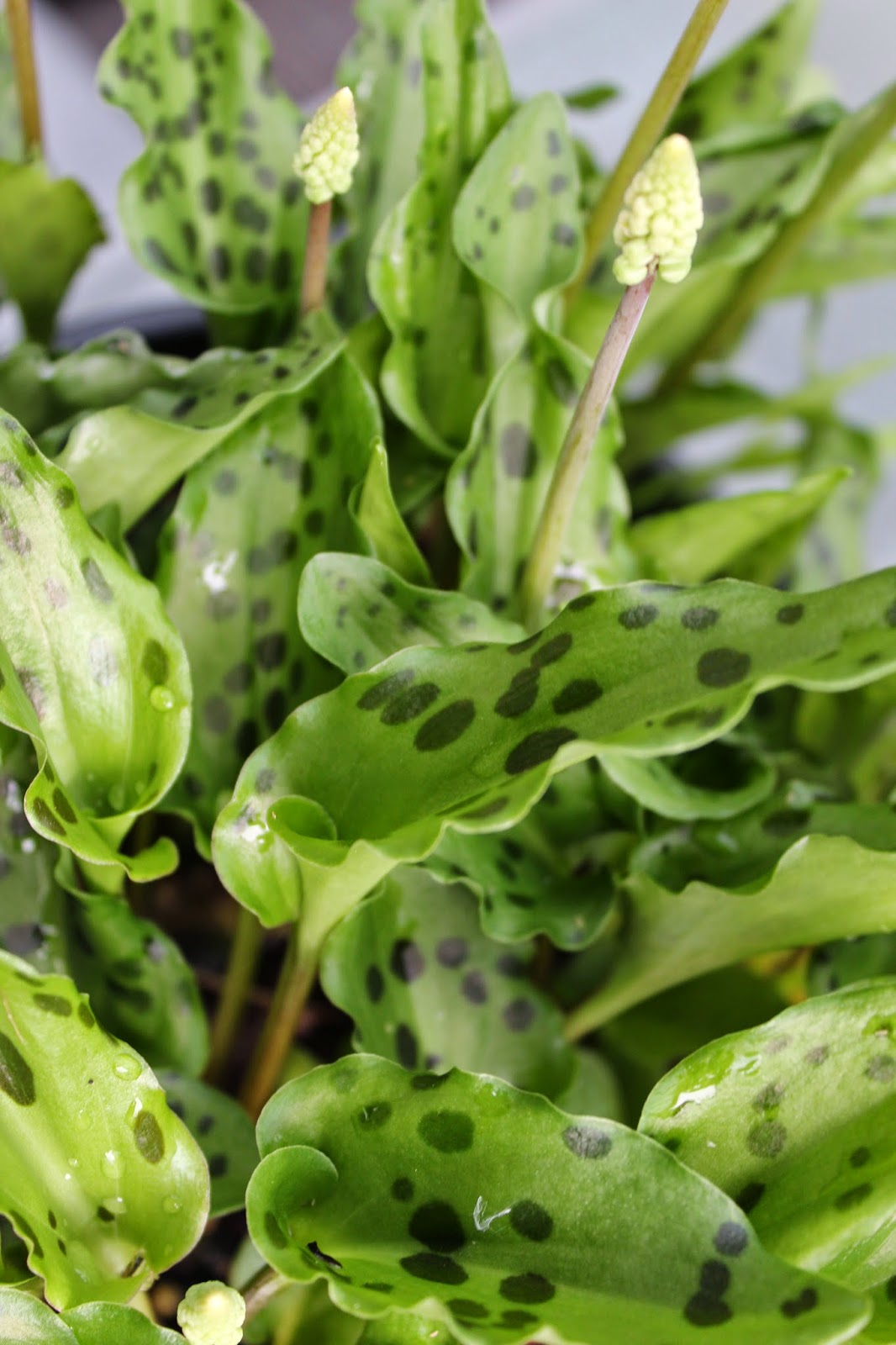
Ledebouria petiolata


Ledebouria petiolata syn. Drimiopsis maculata
(Hyacinthaceae)
The good folk at Larkman's Nursery in Victoria bought this to my attention recently as they market it as an 'African Hosta'. Unlike the Japanese Hosta this plant thrives in poor soil and with minimal water but it is equally loved by snails and slugs which generally spoil its appearance as soon as your back is turned. At this time of year it produces masses of short stemmed white flowers which resemble miniature Hyacinth but without the perfume. It grows from a series of fleshy bulbs which protrude slightly above the ground.These can be easily divided to form new clumps of plants. I am in two minds about this plant; one could consider it as a "novelty" item or as a serious contender for a difficult garden site of dry shade under trees where not much would grow and where it would be quite at home. Otherwise it makes a terrific pot plant which can be brought indoors when in flower or if you like things a bit dotty/spotty.

Thursday, October 16, 2014

Euphorbia enopla

 Euphorbia enopla (Euphorbiaceae)
Cactus for indoors? Certainly and this would be a good candidate as it only grows to about 1 metre. This is frost hardy species which originates from South Africa has very attractive long reddish spines which turn to black as they age. When I look at this specimen I can see that the side branches could be removed and used as propagation material to grow new plants thus changing the shape to a more central column.

Tuesday, August 27, 2013

Coecogyne cristata


 Coecogyne cristata
About eighteen months ago I was given this pot containing an unidentified orchid as a thankyou for doing a plant delivery. I placed it in a semi shaded spot, and, apart from the occasional watering, it hadn't received much attention. Then a week or so ago I noticed a couple of long stems hanging over the side of the pot, two streamers of flower buds. The buds were enclosed in a curious coffee stained envelope which made me think it had been sunburned or damaged by the wind. Then this 'keel' fell away and lovely fragrant white flowers emerged. It turns out to be a cool climate epiphytic orchid from the Himalayas and a 'good variety for beginners' which is just my ticket. Apparently it flowers when winter snow is melting and can tolerate quite a wide range of climates, being popular as a houseplant in Europe for that reason. In Germany it goes by the name of schneekonigin or 'snow queen' which makes it sound like a brand of ice-cream.
While I am not about to bitten by the orchid collecting bug, it is nice to have a few varieties in the garden as part of the spring flower scene especially as they demand so little attention to make them look fabulous.
 I don't have any 'how to grow orchids' books but I can recommend these two as good 'who-done-it' adventure style mystery books on the subject. Susan Orlean's funny and sad The Orchid Thief was made into the terrific movie Adaptation which had Meryl Streep playing journalist Orlean and is a must see for anyone who collects plants or who runs a plant Nursery.

Eric Hansen's Orchid Fever is a real eye-opener into the bureaucratic world of 'CITES' plant conservation/protection and the obsessive world of plant collectors who pay big dollars for the truly rare and exotic.

Friday, May 10, 2013

Sun-hardy Coleus

  This is a variety which is winter hardy if given a spot in the garden which is sheltered and away from cold drying winds. There are a few like this, though it is the really spectacular ones with very large floppy leaves like stained glass windows which tend to be the least hardy. So I was given a cutting of this one and I grew it on in a small 4 inch pot. It was placed in the corner of the glasshouse amongst some other plants and I hardly gave it a second thought over summer. Then last week as I cleaned up the plants around it over it toppled having grown some one and a half metres tall with thick woody stems and roots squeezed out of the pot and creeping across the floor. Fortunately Coleus are fairly forgiving and I can start the whole process all over again by cutting off the top branches and putting the pieces in a jar of water till they grow new roots. This time I will plant it out in the garden so it can end up looking as good as the one in the photo.
2017 update: I still grow this variety.

Sunday, May 5, 2013

Acalypha hispida 'Rabo de Gato'


Acalypha hispida (Euphorbia Family)
These days members of the Euphorbia family (Euphorbiaceae) get bad press, especially on the Internet, and are associated with various warnings about poisonings or allergic reactions when gardening with them or when handling the plants. No such warnings for this one however as this plant is worth growing for the unusual tassel like flowers which extend to some 30 cm within the plants foliage. It is a bit of a tropical beauty, originating in Oceania but widely grown as an indoor plant in cooler regions.
As a shrub it can grow up to 2 metres or more but obviously will stay smaller in a pot. For many years I have grown and sold the small version Acalypha reptans which is more of a ground cover plant or hanging basket specimen. It is quite hardy for me and flowers for most of the year so I am hoping the same goes for this species. Only time, and the kind of winter we get, will tell. Watch this space for when plants become available. Propagation is usually by cuttings in the warmer months.

Thursday, April 18, 2013

Rhoeo discolor 'Stripe-me-Pink'

 Rhoeo discolor 'Stripe-me-Pink'
Like many members of its Family Commelinaceae, this plant likes it in a garden spot or in a container which is kept on the dry side and is, as well, tolerant of poor soil. It also likes it in a warm to hot place being frost tender. It is often available at Garden Centres included with indoor or balcony plants for those who garden in cool climates. The vibrant pink and magenta striped leaves are at their best however when grown in full sun and will more than likely fade in shady conditions.
Each spring I grow a batch for sale as summer bedding and those unsold will often succumb to rotting when given overhead irrigation in the humid summer months. Water collecting in the centre of the plants results in fungal disease problems and the whole plant turns brown and collapses (see picture below)

Rhoeo given too much water will quickly rot and collapse

The variety name 'Stripe-me-Pink' is a clever play on words and is based on the Australian colloquialism 'Strike me Pink' which probably had its origins in the sheep shearing sheds of yesteryear. 'Pinking' means a sheep has been shorn too close to the skin so that the pink skin shows through, making it vulnerable to fly-strike, hence 'Strike me Pink' is used when speaking in surprise or alarm. Can also be used in combination with the word 'strewth'.
A local 'pink' expression involving the town of Jamberoo can be found in the book by W T Goodge Hits! Skits! and Jingles! published in 1899: 'The leathery necks he pinked 'em too, / Did Gentleman Jack of Jamberoo'
2017 update: I no longer grow this plant.

Friday, April 12, 2013

Carrion Flower

Stapelia grandiflora, Carrion Flower

Flower bud before opening
For a week now I have been waiting for this massive balloon shaped bud to open and it finally did so today. This succulent plant is well known for emitting the smell of rotting meat so as to attract flies to pollinate it, hence the name carrion flower.
 It did not disappoint as three different species of flies were in attendance when I took these photos. This admission to observing flies may bring the accusation of my having too much time on my hands, or, of me finally having gone completely bonkers. Yes, guilty as charged....
So the common housefly, Musca domestica,  didn't wait around long when I made my presence felt, obviously preferring to be inside lurking on the kitchen bench.The brown blowfly, the 'blowie' or Calliphora stygia preferred to hang out on the petals keeping his eye on the pair of green bottle flies, Lucillia sericata,who were doing most of the pollination work.The 'green bottles' do have a wonderful iridescent sheen to their bodies but their reputation for coming to the aid of forensic detectives at crime scenes doesn't make them the most lovable of creatures.
 

 Open flower as seen from behind
 Hairy petal edges


 Unique star shaped flower centre
 Green bottle flies doing their pollination duties
 A large brown blowfly waiting in the wings


Thursday, March 28, 2013

Manettia bicolor, 'Brazilian Firecracker'

Manettia bicolor ,'Brazilian Firecracker' (Family Rubiaceae)

There are not many climbers which are small and dainty enough to be planted safely amongst shrubs, used as a ground cover or placed in a hanging basket or decorative container and be continually in flower. This is one such plant and I was fortunate enough to be given a cutting of it a year ago. Though originating from South America and suited to warm climates it will tolerate a few degrees of frost and can be grown successfully on a windowsill indoors. The tubular flowers which are only about 20mm long, are a brilliant scarlet with vivid yellow flared lobes at their apex.
 For those who remember their childhood firecrackers, the flowers remind me a bit of 'Tom Thumbs'  which were about the same size and were attached to each other by a string so they went off in succession with quite a punch.
This plant is named for Italian botanist Savero Manetti (1723-1785) who spent time as supervisor of the Botanic Garden in Florence at a time when such gardens contained herbal plants or "simples", associated with herbalism or herbal medicine.

Saturday, March 16, 2013

Hibiscus rosa-sinensis 'Cooperii', Snowflake Hibiscus


Hibiscus rosa-sinensis 'Cooperii'
This Hibiscus has long been a part of the indoor plant trade and its delicate small variegated white leaves, which have a hot pink tinge at certain times of the year, have given it the common name of the 'Snowflake Hibiscus'. The variegation or lack of chlorophyll in the leaves means it is is not a particularly vigorous grower in all but tropical climates. I keep it in a pot and it makes a nice contrast with darker foliage plants. This is the first time mine has flowered and the pendulous pillar box red blooms are very attractive.
It needs a warm spot over winter as leaves may drop if it is very cold. For some reason insect pest find the leaves particularly tasty and again this could be due to the lack of green pigment which may inhibit predators.

Wednesday, July 18, 2012

X Cryptbergia 'Rubra'

X Cryptbergia 'Rubra'
This Bromeliad is a hybrid between a Crypthanthus and a Billbergia and forms a compact rosette of many offsets to about 40 cm across. It is noteworthy for the brilliant copper red leaves which change to deep burgundy depending on the time of year and how much sun it is given. I like to grow it in full sun as the leaf colour is deeper and richer. You could use that overused word "sustainable" to describe this plant as it requires no special watering or fertilizer to keep it looking good. It is hardy down to about zero C. Plants may be divided in spring and potted into an orchid style potting mix. Small flowers appear in the central rosette but these are fairly insignificant. In cool climates it is suitable to use as an indoor or patio plant.

Wednesday, June 13, 2012

An African Violet

 Maroon or ruby coloured? African Violet
I don't have a collection of African violets but I think this one would make a nice centrepiece if I were to have an indoor display of them.

Sunday, June 10, 2012

Zygocactus, Schlumbergera


 The "Zygoes" have been flowering their heads off for the past few weeks. They are one of those plants which come into their own for six weeks of the year and make a a big splash of flowers and then go to rest for the remainder of the year. All the showy hybrids are descended from two epyphitic species Schlumbergera truncata and Schlumbergera russelliana which are native to South America and primarily Brazil. Like other epyphites they make good container plants and have low water and fertilizer requirements. Of course if you want a truly spectacular specimen it is worth giving it some fertilizer over the summer months before the buds start to form in autumn. Zygoes look good in hanging baskets or in pots with a narrow neck so that the flat sprawling leaves are able to splay out in all directions without being encumbered. There are lots of interesting coloured forms available from pure white to salmon pink, orange, red and peachy toned ones. They grow best in semi shade and can be rested when not in flower under trees and are able to cope with just occasional rainfall to survive well. The book below gives all the best detailed information on them and though it was published twenty years ago the cultivation notes and history on the genus is still valid and current.


Thursday, May 3, 2012

Bouvardia longiflora humboldtii

Bouvardia longiflora humboldtii (Rubiaceae)
Sweet Bouvardia (Mexico)
The BBC series World's Most Dangerous Roads which aired here on SBS was quite a good armchair adventure. Though last nights 'team' of Ben Fogel and Hugh Dennis looked as if they could barely stand to be in each others company on their journey through Peru. What was interesting to see was the German settlement deep in the Amazon jungle dedicated to the great naturalist Alexander Von Humboldt. Humboldt travelled through Latin America between 1799-1804. He spent time in Mexico and this sweetly perfumed flower, which is related to the Gardenia, was named after him.
I grow mine in a pot as it is not a particularly robust plant. It is a small shrub with lax stems  weighed down by the terminal clusters of pure white flowers. The flowers are a popular addition to wedding bouquets. It flowers all summer and is semi deciduous or completely deciduous over winter. Like most plants from Mexico, it is tolerant of dry periods and in my case this usually means it has missed out on watering and has forgiven me and just kept on flowering after a brief sulk and flower drop.I took cuttings over summer and wait to see how many have taken.
Alexander Von Humboldt (1769-1859)
Portrait from 1843 by Joseph Karl Stieler


Monday, April 30, 2012

Devil's Ivy, Epipremnum pinnatum 'Aureum'

This is a very 1970's Brisbane photo.The orange flowering tree in the background is an African tulip tree, Spathodea campanulata which now has the dubious title of 'Class 3 declared pest plant under Queensland legislation'. What caught my eye however was the climber growing up the palm trees. It goes by the common name of Devil's Ivy being a popular houseplant worldwide. I have a large tub of it in a glasshouse and it is liking it so much it is climbing the walls, relishing the heat and humidity. It is still in the juvenile stage with the leaves measuring about 15cm long. As it grows the leaves get bigger and become irregularly divided and can reach about 80cm long as shown here. Botanically it has undergone quite a few name changes and is often referred to as Scindapsus, Pothos or Rhapidophhora. For the time being it is now officially Epipremnum pinnatum 'Aureum' and a member of the Aroid family. The plain green form originated in the Solomon Islands and this golden coloured form is a sport thought to have originated in nursery cultivation.Various cultivars are available and are often sold as basket plants and these include 'Golden Queen' with mainly yellow leaves, 'Neon' with chartreuse foliage and 'Marble Queen' with white variegated leaves.They are extremely tough plants and before moving my plant into a favourable spot I had neglected to water it or care for it at all for many months. Though most of the leaves had dropped off it responded quickly to a bit of TLC and is now thriving. Most of the rope like climbing stems produce roots at the nodes so cuttings are easy to strike and it is even quite happy to grow in a jar of water on a windowsill.

Tuesday, April 24, 2012

Justicia scheidweileri 'Brazilian Fireworks'

Brazilian Fireworks,
Justicia scheidweileri 
 I love the vibrant colour contrast of the bracts compared with the flowers on this little plant. It is a small shrub which grows to about 20cm and flowers for most of the year prefering a sheltered or shady spot. It would be suitable to grow as an indoor plant in frosty climates and brought outdoors over summer. I hope to get some cuttings of this plant soon and have it growing well by next summer.
2017 update: I still only have one small plant of this. It is not particularly robust.