Monday, November 22, 2010

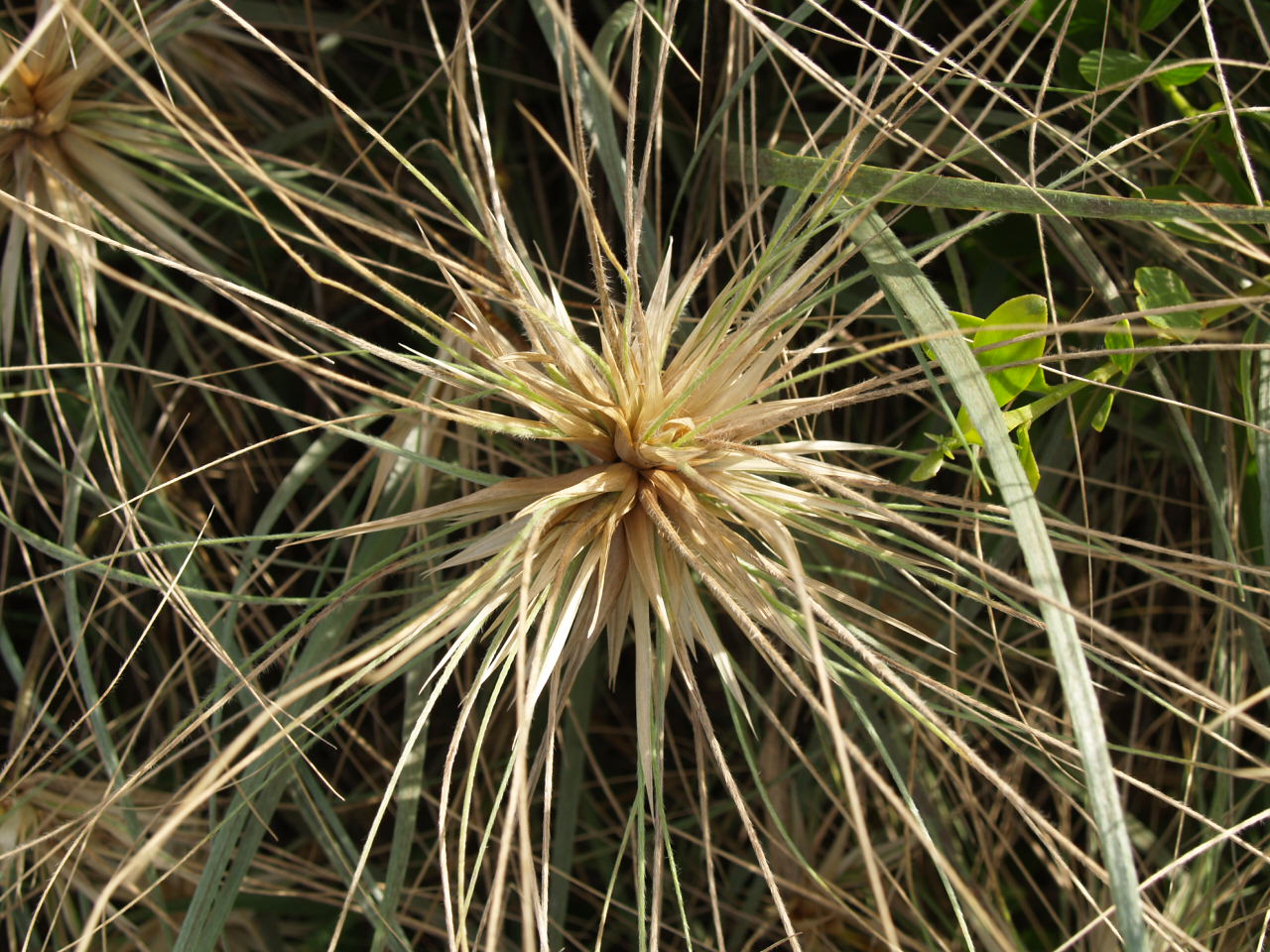
Spinifex sericeus, Beach Spinifex

Beach Spinifex 
Spinifex sericeus
This native grass is familiar to anyone visiting a surf beach along the coast from Victoria to northern Queensland. It is one of the most important sand stabilizing plants in eastern Australia.The female inflorescence, which is pictured here, consists of a group of long narrow spines which change colour from blue-grey to straw as they mature. The spines are actually soft to touch and carry minute flowers. They are fertilized by the male flower which is a short fan shaped spikelet formed on a separate stem some distance away. When the seed is ripe, the whole female structure detaches from the plant and cartwheels across the sand shedding seed as it goes. They mimic the seed dispersal method of the desert tumbleweed familiar to those who enjoy old western movies.
I do not have any plants of it available for sale.
Sunday, November 21, 2010

Plant pathology:Mosaic virus of Zucchini

Distorted, twisted mottled leaves are indications of mosaic virus on this Zucchini. The fruit is smaller and lumpy with variegation of yellow and dark green. The disease is caused by the watermelon mosaic virus which is spread by aphids such as the green peach aphid (Myzus persicae) and other species. Once the plant is showing symptoms it is best removed and put in a bin, not in compost, as the aphids which caused the disease have long gone.

Fasciation

Fasciation is an abnormality of plant stems in which normally round stems develop in a flattened way. The yellow Achillea filipendulina 'Gold Plate' pictured above ,which is in flower at the moment, has several stems affected by this mutation. It does not normally affect the health of the plant and can even be considered a desirable trait, particularly amongst succulent growers where the "crest" form of a flat stem topped with tightly packed leaves is considered decorative and worthy of the show bench.
Echeveria x 'Gilva' crest form


did i tell u i liked sweet peas?

picking a bunch every few days..........

Friday, November 19, 2010

Zucchini pest:The Pumpkin beetle, Aulacophora hilaris

Pumpkin Beetle: Aulacophora hilaris

I am beginning to think that having a plot at a community garden is a great opportunity to learn about pests and diseases. This is my first encounter with this 6mm long native beetle. It is easily recognised by the distinctive four black spots over its wings. From my observation, it seems to love company as large numbers congregate on one leaf which they shred until a lacy skeleton is left while neighbouring plants are left entirely alone. Old fashioned remedies to deal with them include dusting the leaves with flour or hydrated lime. Planting nasturtiums nearby is also supposed to be a deterrent. So far they are not doing enough damage for me to take any drastic action as to their removal and I can live with a few shredded leaves.

Illustration of Pumpkin Beetle by E H Zeck
from Insect pests of fruit and vegetables in NSW
by Hely. Pasfield. Gellatley
(published by Inkata Press)


Tuesday, November 16, 2010

Pine Tree Pest, Pine Adelgid insect

White woolly secretion around the base of the needles of Pinus thunbergii indicates the presence of the pine adelgid insect (Pineus pini). This pest is related to aphids which suck the sap from plants. In my nursery both Pinus mugo and Pinus thunbergii have been affected possibly due to the plants being placed too close together and from an uneven watering regimen. I use an oil based spray to remedy it.

Saturday, November 13, 2010

Sweet Chariot Rose

Rosa 'Sweet Chariot'

A mate of mine has decided he wants hanging baskets along one side of his new pergola and despite my best efforts to talk him out of doing so, re you have to water them twice a day in summer, he is going ahead anyway. I picked up this miniature Rose 'Sweet Chariot' at a recent garden show and it is said to be perfect for hanging baskets as it has a cascading habit. Reading up about it though, the proper Sweet Chariot should be a double flowering rose bred in California by Ralph Moore from miniature 'Little Chief' and the rambler 'Violette'. It has a delicate sweet perfume and iridescent magenta flowers. I am not sure why this one has reverted to a single flower but it is quite eye-catching none the less.
I have always liked the song Swing Low Sweet Chariot and on YouTube you can see the definitive classical version sung by Kathleen Battle, the soul version by Etta James and the vocal gymnastics of Beyonce on the pop version. And then there is UB40 who appropriated the song as the anthem for the England Rugby team . So we will ignore that entirely as they will be soundly trashed by the Wallabies in the test match played today (our time about 1.15 AM Sunday)