Friday, January 13, 2012

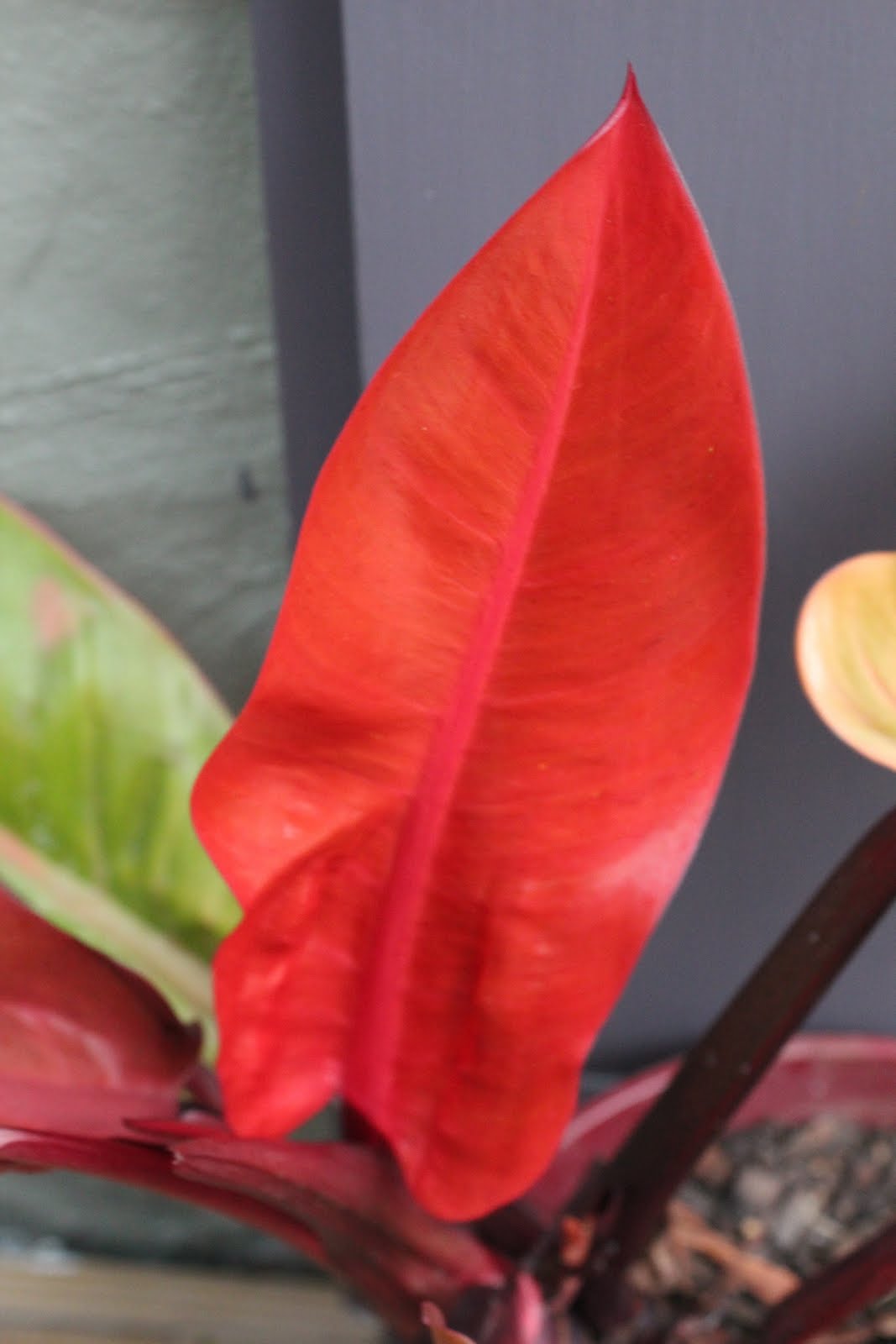
Red Leaf Philodendron

Philodendron x 'Red Leaf'
Most of the Philodendrons which are used as indoor plants or warm climate garden specimens originate in tropical South America. I have this one in a pot on a sheltered patio and am always amazed by the red colouring of the new leaves. As the leaves age they go a deeper metallic purplish red. The original "Red Leaf Philodendron" was a hybrid species of domesticum x erubescens, the so called "blushing philodendron". It was bred by a Mr Manda and hence bore the name x mandaianum. It was released in the United States in 1936 for use as an indoor plant.

Wednesday, January 11, 2012

Edwardian Striped Petunia

I like the stripes of summer especially in Petunias like the one pictured here. The stripe was the height of fashion during the Edwardian period; that first decade of the 20th century. It represented a jaunty casting off of all the stuffy Victorian gloom. The Australian artist Emanuel Phillips-Fox captured this in his sun drenched summer painting The Arbour from 1910. The boldly striped dress of a woman seated in a wicker chair is as vibrant as the boy in his red sailor suit who is ready to leap out of the scene and chase his hoop. The joys of summer.....
The Arbour 1910
Emanuel Phillips-Fox (1865-1915)


The height of fashion for men: the striped trousers with matching tie of the morning suit.

Saturday, January 7, 2012

Heliotropium europaeum

Heliotropium europaeum

This is the first time I have come across this weed growing near the coast. It is normally found in southern inland New South Wales, northern Victoria and the southern parts of South Australia growing mainly in the summer months on fallow ground or amongst pasture grasses. It is a significant weed because it is poisonous to sheep and cattle, with leaf samples indicating the presence of pyrrolizidine alkaloids ( helitrine, lasiocarpine and 3 others). Grazing and consumption of the plant causes liver damage which may not manifest itself until the second year. Damage to the liver by the alkaloids leads to an abnormally high uptake of copper from the pasture. When the animals are stressed by say, sudden cold, droving or fright, the copper is suddenly released and they develop the haemolytic crisis of chronic copper poisoning; dropping dead due to kidney failure. Cattle are more susceptible than sheep. Nasty weed indeed.

French Marigold 'Sparky'

Marigold 'Sparky' Tagetes patula


It really is Marigold week as I notice them in bloom in lots of gardens at the moment. I have a low planter filled with 'Sparky' and its rich mahogany red colour is incredibly bright.

Marigolds from seed


Marigold 'Sweet Cream' in the 'Jap' Pumpkin patch

Marigold 'Safari' yellow as edging amongst leeks

Last year a kind reader of this blog sent me seeds of these Marigolds as a thank you for sending her some other seeds. They are from the American company 2Bseeds which is an enterprise of the Busch family in Golden Valley, Minneapolis in the State of Minnesota. Their seeds are foil packed with a zip-lock which always comes in handy for ease of storage and less likelihood of spillage. However what I like about their seed packets and their web site is that they give all the technical information on sowing, germination and aftercare which is normally only provided for professional growers. For example the Marigolds are recommended to be grown at a pH of 6.2 to 6.5 as a pH of less than 6.00 may induce iron, manganese or sodium toxicity in the plants. Symptoms are exhibited on the lower leaves and include yellowing or burning of leaf edges. Marigolds can therefore be used as an indicator plant for acid soils.

Friday, January 6, 2012

Some Summer White Flowers


Dahlias in the Turmeric bed

Coriander
The flowers are very attractive to bees and beneficial insects. It is worth waiting for the seed to go brown before removing the plants. Seed scattered around these plants will germinate as soon as the autumn rains begin.
Leucanthemum x superbum 'Chiffon'
A terrific Shasta daisy with petals which are crimped at the edges. Flowering on tall stems.

Echinacea purpurea 'White Swan'
What always amazes me about Echinacea is that they go completely dormant and underground over winter and then before you know it they are back in flower again so quickly. The white flowering form is a bit lower growing and more compact so is able to stand up to strong wind more easily.

Elderberry
Sambucus nigra
Lovely flat plates of flowers at this time of year . As the flowers drop off the whole umbel turns a vibrant dark burgundy red.
White flowering Borage
 Borago officinalis alba

The cycle of flowering, seeding and regrowing in a different spot continues all year for both the blue and this less common white flowering form of the wonderful Borage.

Thursday, January 5, 2012

Wild bird seed

Red-browed Finch
Photo:
S G Lane Collection
Australian Museum
Flocks of red-browed finches have been hard at work lately making the most of the summer weedy grasses which have been producing lots of ripe seed. I often complain about weeds in the garden because they look untidy and then remember that they provide food for a diverse range of animals, birds and insects.

A patch of barnyard grass (Echinochloa sp), summer grass (Digitaria sp) and Millet (Setaria italica)