FLOREZ NURSERY CLOSED
For more information on plants featured here phone Ian on 0412 123 240 or email nurseryflorez@gmail.com
Mailing Address:
Post Office Box 143
Berkeley NSW 2506
Australia
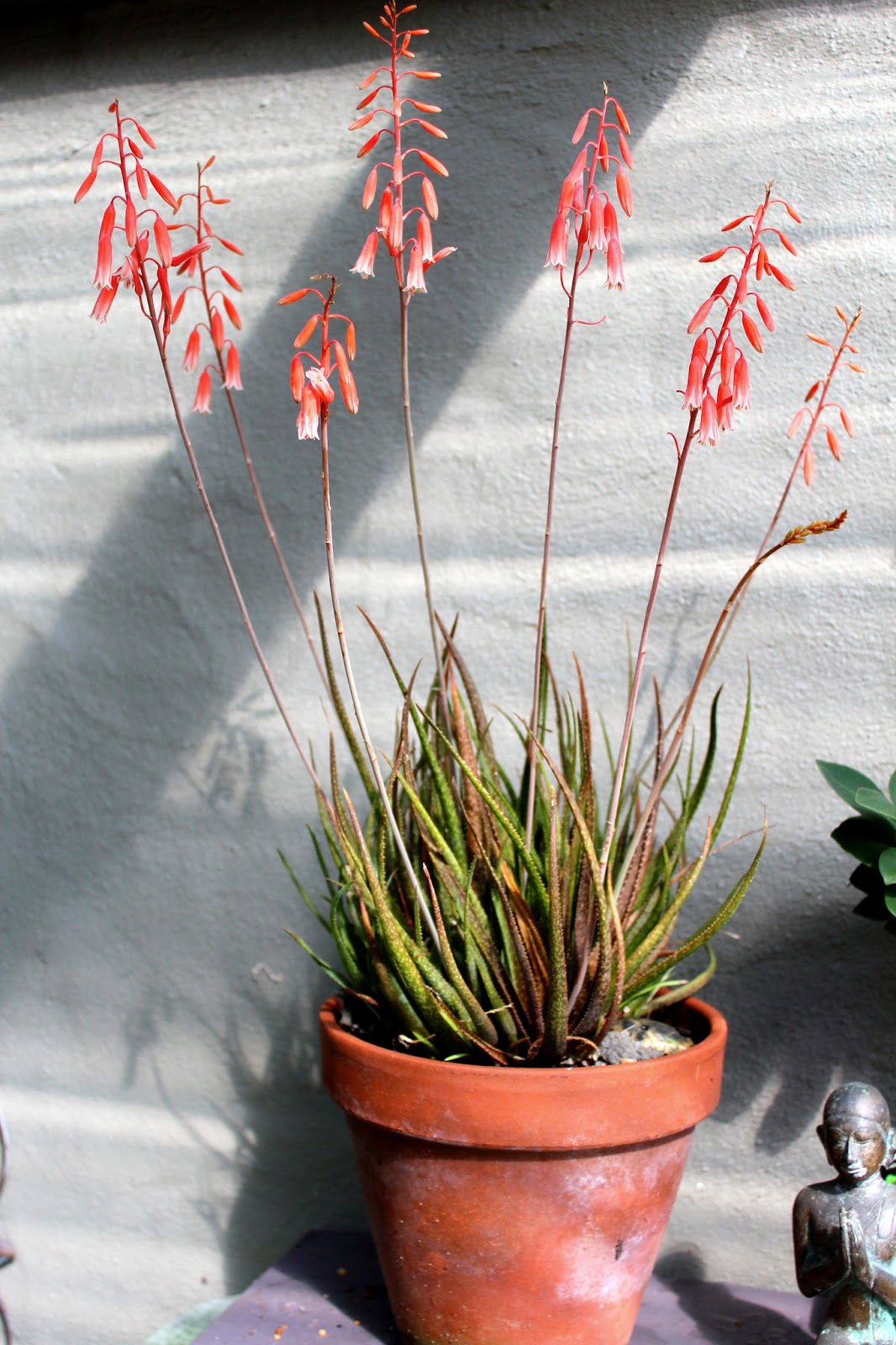
Undemanding is a word I wish I could use more often when it comes to growing various plants but it is a very apt description in the case of this miniature Aloe.
Throughout the year thin wiry stems emerge from a neat clump of olive green succulent leaves bearing an inflorescence made up of tiny white fringed bright coral pink bells.
Occasionally I tidy up the plant, removing old leaves and breaking off the spent flower stems but that is about all the attention it gets. When in flower I move it onto an outdoor table so better to see the delicate flowers up close.
A brilliant tangerine orange colour on this Hibiscus but I can find no information as to its origin. It has open ruffled petals which tend to fan out from the centre in the windmill style. Good glossy foliage as well so it is going in the stock garden to see how it performs over the coming year.
It is always the way, just when you have a batch of plants ready for sale and and they are looking fantastic something happens to make them worthless. Silver foliage plants have adapted to grow in climates where the conditions tend to be hot and dry with little humidity in the atmosphere for most of the year, so when the conditions are not to their liking they firstly develop unappealing black spots on the leaves and then the stems start to collapse having rotted in the middle. Not much can be done other than salvage a few tip cuttings which have been unaffected by the rot and start again. Cooler weather and winter temperature tend to suit this plant better and they love a spot on the coast in the full blast of salt wind and/or growing in sandy soil.
Swann abounding in leisure, fragrant with the scent of the great chestnut-tree, of baskets of raspberries and of a sprig of tarragon...
The 267 plants in the writings of Marcel Proust is a terrific book written by Adelaide author Dr Brian Morley. It was published late last year by New York publishers Edwin Mellen Press who have the dubious Wikipedia entry of "publishing books which often prove to contain quite extraordinary gibberish". Perhaps this comment could also be labelled on much of Proust's In Remembrance of Things Past (A la Recherche du Temps Perdu) , the first volume of which, Swann's Way is having its 100th anniversary of publication this year.
I have to admit to reading it in fits and starts. The perfect book to read at bedtime because it sends you to sleep after just a few pages, or, as Roberto Bolle in the video below describes, it ..." the perfect book to take to heaven as you would have eternity to read it".
For garden lovers however it is a source of inspiration. The grandmother of the young Marcel who gardens at "Combray" (Illiers in the real world) strides about surreptitiously removing rose stakes to make them look more natural and even goes out in the 'rain-lashed garden, pushing back her disordered grey locks so that her forehead might be freer to absorb the health giving draughts of wind and rain', a true gardener indeed, though this may in fact be more of a reaction to her well regulated bourgeois life with maid Francoise always at her heel.
The big Horse-Chestnut tree under which the family gathers to share a meal or gossip is central to the Combray garden. A true temperate climate tree its large seeds or 'conkers' are not edible like the familiar Sweet Chestnut but are used in France to wash linen and fabric after being ground and mixed with water.
This is an old variety of Hibiscus which is mentioned in garden books in the early decades of the 20th Century. The brilliant scarlet flowers are of a medium size and are produced prolifically over a long period. I have seen it used as a hedge plant and it is still recommended for use in that way today.
The variety name 'corteges' intrigues me as the singular word is usually associated with ceremonial or funeral occasions. Was this flower used as a substitute for the Flanders Poppy (the poppy wreath on a soldier's tomb), as we pause to reflect on the meaning of ANZAC day tomorrow?
A large rich velvety 'dragon red' flower has given this Hibiscus world wide recognition since its introduction to the garden world in 1960 in the United States.
It grows as a fairly large leggy shrub but it can't be kept lower and more bushy if given an annual prune in spring. Grafted specimens of this variety are often available for gardens which have heavy soil which is less well drained or for climates outside the sub-tropics where winters are colder and wetter.
On sunny late afternoons, usually around dusk, these seed grown Petunias, which have relatively small flowers ,seem to have more in kin with the original wild night scented species which was discovered in South America more than a century ago.
They release a heady perfume, a sort of musky spicy smell which is obviously meant to attract a moth pollinator from afar.
Perfume in flowering plants is often lost the more extensively they are improved. I think something can be said for growing some of the old open-pollinated flower varieties as well as trying the new flamboyant hybrids.